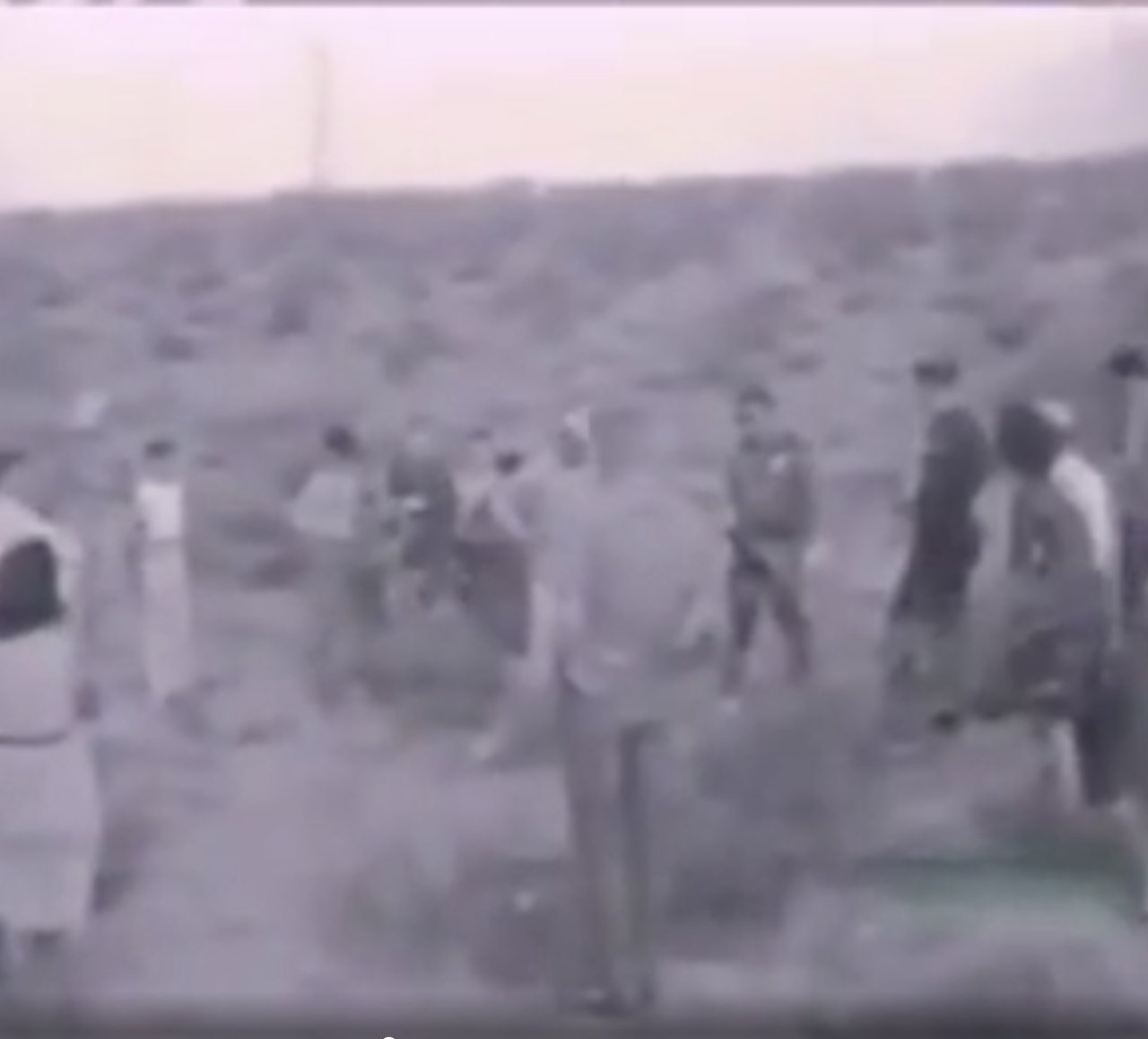
ARCHIVE REFERENCE · Curated UNVEILED archive image
Verified HistoricalWitness Testimony#socorro#zamora#1964#close-encounter#physical-marks#blue-book
Lonnie Zamora Socorro Landing
Date
1964-04-24
Location
Socorro, New Mexico
Witnesses
Officer Lonnie Zamora; FBI evidence
Type
close-encounter
Entity
Other
Craft
Egg-shaped
Evidence
physical
Reality
physical
Evidence Index
90/100
Popularity
100/100
Community Rating
4.6 (178)
Encounter DNA
72 similar encounters discovered
Compare traits, communications, symptoms and locations.
Full Report
OPENING SCENE
At 5:45 p.m. on Friday, April 24, 1964, Lonnie Zamora — a 31-year-old patrolman with the Socorro Police Department in central New Mexico — was alone in his squad car, on a routine pursuit of a speeding Chevrolet on U.S. Route 85 south of town, when he heard what he later described as a roaring noise and saw, off to the southwest, a column of bluish flame in the desert. He abandoned the chase, climbed a low gravel ridge, and looked down into a shallow arroyo. What he reported seeing — a smooth, white, oval object on four metallic legs, two small humanoid figures in coverall-like clothing standing nearby, and a hand-painted insignia he was careful to describe to investigators in person but not in the press — would, within forty-eight hours, attract the attention of Project Blue Book consultant Dr. J. Allen Hynek, FBI Special Agent Arthur Byrnes, and U.S. Air Force Major Hector Quintanilla. Sixty years later, the case remains in Project Blue Book's permanent file under the official classification "Unidentified" — one of only 701 cases out of 12,618 to receive that rating.
BACKGROUND
Socorro is a small high-desert town in central New Mexico, about 75 miles south of Albuquerque, near the New Mexico Tech university campus and the U.S. Army's White Sands Missile Range. On the evening of April 24, 1964, Patrolman Zamora was the duty patrolman in Socorro. He was a five-year veteran of the local police department, with no prior connection to UFO research.
TIMELINE
• April 24, 1964, ~1740 — Zamora begins a vehicle pursuit south on U.S. 85.
• ~1745 — He hears a loud roar and sees a flame in the desert. He abandons the pursuit.
• ~1747 — From a low ridge, he observes a white, egg-shaped object on legs in an arroyo approximately 200 yards away, with two small figures next to it.
• ~1748 — One of the figures appears to notice him. They move into or behind the object.
• ~1749 — Zamora drives closer; the object emits a louder roar and a bluish flame, lifts off vertically, and disappears over the mountains to the southwest at high speed.
• ~1750 — Zamora radios Sergeant Sam Chavez of the Socorro Police Department for backup. Chavez arrives within minutes and observes the still-glowing brush at the landing site.
• ~1810 — FBI Special Agent Arthur Byrnes is contacted; New Mexico State Police arrive.
• April 24–25, 1964 — Site is roped off. Four indentations in the desert soil are photographed. Slight burn marks on greasewood brush adjacent to the site.
• April 26, 1964 — Project Blue Book consultant Dr. J. Allen Hynek arrives to investigate.
• April 28–May 1964 — Major Hector Quintanilla (Blue Book chief) conducts on-site interviews.
• 1965 — Hynek's interim report concludes the case is "unidentified."
• 1969 — Final Project Blue Book classification: "Unidentified."
• 1973 — Hynek publishes his analysis in "The Edge of Reality."
• 2009 — Zamora dies. He had given consistent public statements about the case until his death.
KEY WITNESSES & PEOPLE
• Patrolman Lonnie Zamora — sole primary witness. Died 2009.
• Sgt. Sam Chavez — first corroborating witness; arrived within minutes of the radio call.
• FBI Special Agent Arthur Byrnes — co-investigator on scene.
• Maj. Hector Quintanilla — Project Blue Book chief, 1963–1969.
• Dr. J. Allen Hynek — Project Blue Book scientific consultant; later director of the Center for UFO Studies.
• Capt. Richard T. Holder — U.S. Army officer from White Sands; arrived on scene the next morning.
LOCATION
A shallow arroyo southwest of Socorro, New Mexico, USA, just off U.S. Route 85. Approximate coordinates: 34.05°N, 106.91°W.
DATES & TIME PERIOD
April 24, 1964, ~17:45–17:50 Mountain Daylight Time. Investigation period: April 24–May 1964.
SOURCE HISTORY
The Socorro case is supported by an unusually thorough contemporaneous record:
1. The Socorro Police Department incident report, April 24, 1964.
2. The Project Blue Book file, including Quintanilla's interviews and Hynek's site analysis.
3. The FBI file from Special Agent Byrnes.
4. Photographs of the four soil indentations, the burnt brush, and the landing site, taken on April 25, 1964.
EVIDENCE SUMMARY
• Witness testimony: A serving police officer with no prior UFO interest; corroboration by a second officer arriving within minutes who saw the still-burning brush.
• Physical traces: Four small indentations in the soil arranged in a quadrilateral, approximately 8 cm deep and 30 cm long. Photographed and measured.
• Soil samples: Analysed by Project Blue Book consultants; no anomalous composition reported.
• Photographs: Of the landing site only, not the object.
• Radar tracks: White Sands Missile Range radar coverage in the area; logs not publicly released.
• Government investigation: Yes — Project Blue Book, FBI, U.S. Army.
MEDIA SUMMARY
No verified photographs or video of the object. The most-cited imagery is Zamora's own hand sketch of the object and its insignia, plus photographs of the landing site.
OFFICIAL RECORDS
• Project Blue Book File 8766, "Socorro NM, 24 April 1964." Final classification: Unidentified.
• Socorro Police Department incident report, April 24, 1964.
• FBI memorandum, April 25, 1964 (Special Agent Byrnes).
MAJOR CLAIMS
• A small egg-shaped object landed in a shallow arroyo southwest of Socorro for approximately 60 seconds.
• Two small humanoid figures in coverall-like clothing were seen briefly next to it.
• The object lifted off vertically on a column of bluish flame.
• Four soil indentations and small burn marks on adjacent brush were observed and photographed within minutes of the event.
SKEPTICAL EXPLANATIONS
• Hoax by New Mexico Tech students: Argued retrospectively in 2014 by Anthony Bragalia, who claimed New Mexico Tech students had executed a "prank" involving a lighter-than-air craft. The institute itself has not officially confirmed this; the alleged student perpetrators have not been individually named in any publicly verifiable form.
• Misidentified Lunar Surveyor test vehicle: Considered and rejected by Project Blue Book; no test vehicle of that description was operating in the area at that date.
• Misidentified U.S. Army Surveyor lander prototype from White Sands: Captain Holder of White Sands stated on the record that no White Sands test was conducted that day.
DISPUTED DETAILS
• The exact insignia Zamora described: Zamora himself was reluctant to publish the insignia because he was concerned it might be exploited by hoaxers; the original sketch is held in the Project Blue Book file.
• The 2014 "student prank" claim is contested and lacks named witnesses or documentary support.
• Whether White Sands radar logs would, if released, settle the question.
DIFFERENT PERSPECTIVES
• Hynek view: One of the most evidentially supported cases in the Blue Book record. Hynek personally rated it as among his strongest "Class A" cases.
• U.S. Air Force official view (Quintanilla, 1965): Genuinely unidentified, but with no national security implications.
• Skeptic view (Klass, Bragalia): A clever student-engineered hoax that fooled the Project Blue Book investigation.
• Researcher view: Even if a hoax is theoretically possible, the contemporaneous corroborating physical evidence and the immediate corroborating witness (Sgt. Chavez) make it unusually hard to dismiss without more substantial confirmatory evidence than Bragalia has provided.
LATER DEVELOPMENTS
• 1969 — Final Blue Book closure as "Unidentified."
• 1973 — Hynek's "The Edge of Reality" devotes a chapter to the case.
• 2009 — Lonnie Zamora dies; his account had remained unchanged for 45 years.
• 2014 — The Bragalia student-prank hypothesis is published online and widely discussed in skeptic circles.
• 2024 — AARO Historical Record Report references the case among well-documented historical incidents.
CULTURAL IMPACT
The Socorro Landing is the single most-cited "police officer witness" UFO case in American history. It is a touchstone case in the U.S. Air Force's own internal history of Project Blue Book and a recurring reference in serious-tone UFO documentaries.
RELATED CASES
• Project Blue Book — institutional context.
• Roswell Incident — earlier New Mexico case.
• Falcon Lake (1967) — also a single-witness, well-documented landing case.
REFERENCES & SOURCES
• Project Blue Book File 8766, U.S. Air Force.
• Hynek, J. Allen. "The Edge of Reality" (Henry Regnery, 1975).
• Quintanilla, Maj. Hector. "UFOs: An Air Force Dilemma" (Wendy Connors archive, posthumous).
• Stanford, Ray. "Socorro Saucer in a Pentagon Pantry" (Blueapple Books, 1976).
• Bragalia, Anthony. "The Socorro UFO Hoax: A Critical Re-examination," 2014 (online).
Witness Discussion0
Sign in to discuss this dossier and vote on the archive.
Log inNo discussion yet. Be the first to weigh in.
Similar Cases
multiple
Historical
CURATED ARCHIVE, USER UPLOAD
1994-09-16 · Ruwa, Mashonaland, Zimbabwe
Ariel School Mass Sighting
Mass Witness Eventclose-encounter
multiple
Historical
CURATED ARCHIVE, USER UPLOAD
1977-09-01 · Colares, Pará, Brazil
Operation Prato: Colares Encounters
Military Encounterphysical-trace
multiple
Historical
CURATED ARCHIVE, USER UPLOAD
1980-12-26 · Rendlesham Forest, Suffolk, United Kingdom
Rendlesham Forest Incident
A multi-night UFO incident at a US-UK military base in Suffolk involving triangular craft observation, ground traces and the Halt memo.
Military Encounterclose-encounter
physical
Historical
CURATED ARCHIVE, USER UPLOAD
1967-05-20 · Falcon Lake, Manitoba, Canada
Falcon Lake Encounter
Witness Testimonyclose-encounter
physical
Historical
CURATED ARCHIVE, USER UPLOAD
1980-12-29 · Huffman, Texas, United States
Cash-Landrum Incident
Military Encounterphysical-trace
multiple
Historical
CURATED ARCHIVE, USER UPLOAD
1996-01-01 · Uintah Basin, Utah, United States
Skinwalker Ranch Anomalies
Government Recordinterdimensional