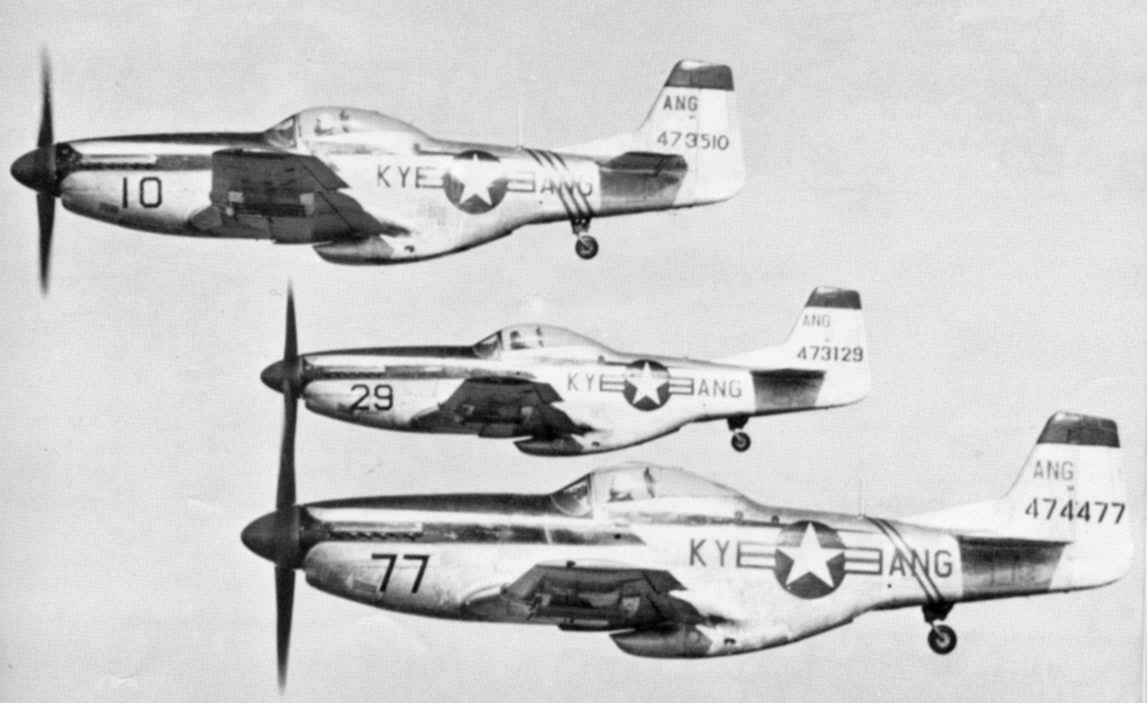
CURATED ARCHIVE, USER UPLOAD · USAAF, public domain
Verified HistoricalMilitary Encounter#mantell#military#historic#craft-sighting
Mantell UFO Incident
Date
1948-01-07
Location
Franklin, Kentucky
Witnesses
Capt. Thomas Mantell, ground witnesses
Type
military
Entity
Unknown
Craft
Metallic disc
Evidence
testimony
Reality
physical
Evidence Index
78/100
Popularity
100/100
Community Rating
4.4 (132)
Encounter DNA
72 similar encounters discovered
Compare traits, communications, symptoms and locations.
Full Report
OPENING SCENE
It was just before 1:45 p.m. on Thursday, January 7, 1948, when Sergeant Quinton Blackwell at Godman Air Force Base, Kentucky, took a phone call from the Kentucky State Police. A round, brightly metallic object had been seen by hundreds of people across north-central Kentucky, slow-moving, very high, drifting south. Within an hour the tower at Godman could see it too. A flight of four P-51D Mustangs of the 165th Fighter Squadron, returning from a routine mission, was diverted to identify it. One Mustang turned back almost immediately for fuel. Two more broke off after climbing to 22,500 feet. Captain Thomas Mantell — a decorated World War II combat veteran on his first peacetime command flight — continued upward alone. His last radio transmission to Godman tower described an object that was "metallic, of tremendous size." Minutes later he was no longer responding. His Mustang crashed at 3:18 p.m. in Franklin, Kentucky. Captain Mantell would become the first known fatality of the modern UFO era.
BACKGROUND
In January 1948 the United States was six months into the post-Roswell UFO wave. Project Sign had been opened by the U.S. Army Air Forces (becoming the U.S. Air Force on September 18, 1947) to investigate "flying disc" reports. Godman AFB sat about 30 miles southwest of Louisville. Captain Thomas Mantell, 25, was a P-51 pilot with 2,167 flight hours and a Distinguished Flying Cross from the D-Day campaign over Normandy.
TIMELINE (Eastern Standard Time)
• Jan 7, 1948, ~1300 — Kentucky State Police begin receiving reports from Maysville and Owensboro of a "circular bright" object moving south.
• ~1345 — Godman AFB tower observes the object visually.
• ~1410 — Four-ship flight of P-51Ds (call sign "Pete-1, 2, 3, 4"), led by Mantell (Pete-1), is diverted to identify.
• ~1415 — One Mustang turns back due to fuel.
• ~1420 — Mantell radios Godman: "I see something above and ahead of me, and I'm still climbing." Wingmen Lt. B. A. Hammond and Lt. A. W. Clements break off at approximately 22,500 ft.
• ~1430 — Mantell radios that the object is "metallic and of tremendous size."
• ~1445 (estimated) — Last transmission received. Mantell apparently continues climbing past 25,000 ft, beyond his Mustang's oxygen-system rating.
• 1518 — Mantell's P-51D crashes in a field 90 miles south of Godman, near Franklin, KY. He is killed.
• Jan 7, evening — U.S. Air Force opens an immediate investigation.
• 1948 — Project Sign attributes the case to a misidentification of the planet Venus, then revises to a U.S. Navy Skyhook research balloon.
• 1952 — Captain Edward J. Ruppelt, head of Project Blue Book, restates the official conclusion: a Skyhook balloon.
KEY WITNESSES & PEOPLE
• Capt. Thomas F. Mantell Jr. — the pilot. KIA in the line of duty.
• Lt. B. A. Hammond — Mantell's wingman; broke off at ~22,500 ft.
• Lt. A. W. Clements — second wingman.
• Sgt. Quinton Blackwell — Godman tower duty officer.
• Capt. James F. Duesler — Godman tower control officer.
• Capt. Edward J. Ruppelt — Project Blue Book chief, later author of the official conclusion.
LOCATION
Northern Kentucky, USA. Godman Army Air Field (now Godman Army Airfield) at Fort Knox: 37.91°N, 85.97°W. Crash site near Franklin, Simpson County, KY: ~36.72°N, 86.58°W.
DATES & TIME PERIOD
January 7, 1948, between ~1300 and ~1518 EST.
SOURCE HISTORY
Three primary contemporaneous sources:
1. U.S. Air Force accident investigation report (declassified).
2. Godman AFB tower logs and radio transcripts (preserved).
3. Project Sign / Project Blue Book file on the Mantell case.
Eyewitnesses on the ground at Madisonville, Hopkinsville, and Bowling Green gave statements to the Kentucky State Police, which were summarised in the Air Force investigation.
EVIDENCE SUMMARY
• Witness testimony: Hundreds of ground witnesses across northern Kentucky; multiple military observers at Godman tower; three wingman aircrew.
• Physical traces: Mantell's crashed Mustang. No evidence of mid-air collision or external impact.
• Photographs: None contemporaneous; archival photos of the crash site exist.
• Radar tracks: None publicly available.
• Government investigation: Yes — initial Project Sign report, later Project Blue Book reassessment, multiple revisions.
MEDIA SUMMARY
No verified photograph of the airborne object exists. Available imagery shows the crash site and Mantell's P-51D wreckage.
OFFICIAL RECORDS
• U.S. Air Force Accident Investigation Report, Jan 1948.
• Project Sign / Project Blue Book file, "Mantell Incident."
• Captain Ruppelt's "The Report on Unidentified Flying Objects" (1956), which is the most authoritative single account.
MAJOR CLAIMS
• Mantell sighted and pursued a large, metallic, bright object at high altitude.
• The U.S. Air Force official conclusion (revised 1952): The object was a U.S. Navy Skyhook constant-altitude research balloon. Mantell, without oxygen, blacked out at altitude and his unmanned aircraft crashed.
SKEPTICAL EXPLANATIONS
• Skyhook balloon (the official explanation, 1952): U.S. Navy Skyhook research balloons could reach 100,000 ft, appear shiny and metallic from below, and drift in the direction of the Mantell sighting. Trajectory reconstructions place a Skyhook flight in the right area on the right day, though the original launch records remain partially classified.
• Venus (the original 1948 explanation): The planet Venus was bright in the daytime sky on January 7, 1948, and was approximately in the direction Mantell was tracking. This was the U.S. Air Force's first attempted explanation, abandoned in 1952 in favour of the Skyhook hypothesis.
• Hypoxia: Mantell's Mustang did not have a pressurised cockpit and his oxygen system was rated to 14,000 ft maximum continuous use. He continued climbing past 25,000 ft. The accident investigation determined hypoxia was the proximate cause of death.
DISPUTED DETAILS
• Which Skyhook flight (if any) Mantell pursued — original launch records have been only partially released.
• Whether all of the daytime ground witnesses can be accounted for by a single Skyhook balloon.
• The exact altitude at which Mantell became unresponsive.
DIFFERENT PERSPECTIVES
• U.S. Air Force / mainstream view: A tragic accident in which an experienced pilot pursued a high-altitude balloon beyond his oxygen rating and died of hypoxia, with the aircraft entering an uncontrolled descent.
• UFOlogist view: An unexplained large metallic object that several ground witnesses described as moving against the prevailing winds; the Skyhook explanation is consistent but not conclusive.
• Historian view: The case is significant less for what Mantell saw than for what it became — the first death in the modern UFO era, an event that pushed Project Sign toward more cautious, more skeptical public statements.
LATER DEVELOPMENTS
• 1952 — Project Blue Book formally re-classifies the Mantell case as a Skyhook balloon misidentification.
• 1955 — Mantell's family receives a Distinguished Flying Cross posthumously.
• 1956 — Ruppelt's book restates the conclusion publicly.
• Mantell's grandson, James R. Mantell, has periodically given interviews about the case.
CULTURAL IMPACT
The Mantell incident was the first peacetime death of a U.S. Air Force pilot in pursuit of an unidentified flying object. It became a foundational story in the early American UFO mythos and is referenced in nearly every 20th-century book on the subject. It also marked a transition in U.S. Air Force public messaging — after Mantell, the official tone became more cautious and balloon-focused.
RELATED CASES
• Kenneth Arnold (1947) — earlier, founding the modern UFO era.
• Project Sign / Blue Book — institutional response.
• Operation Skyhook — the U.S. Navy program of which Mantell may have intercepted a balloon.
REFERENCES & SOURCES
• U.S. Air Force Accident Investigation Report, Jan 1948.
• Ruppelt, Capt. Edward J. "The Report on Unidentified Flying Objects" (Doubleday, 1956).
• Project Sign / Project Blue Book file, "Mantell."
• Hynek, J. Allen. "The UFO Experience: A Scientific Inquiry" (Henry Regnery, 1972) — Mantell discussion.
• Mantell, James R. — public interviews on the family's account (2000s onward).
Witness Discussion0
Sign in to discuss this dossier and vote on the archive.
Log inNo discussion yet. Be the first to weigh in.
Similar Cases
video
Historical
CURATED ARCHIVE, USER UPLOAD
2004-11-14 · Pacific Ocean off San Diego, United States
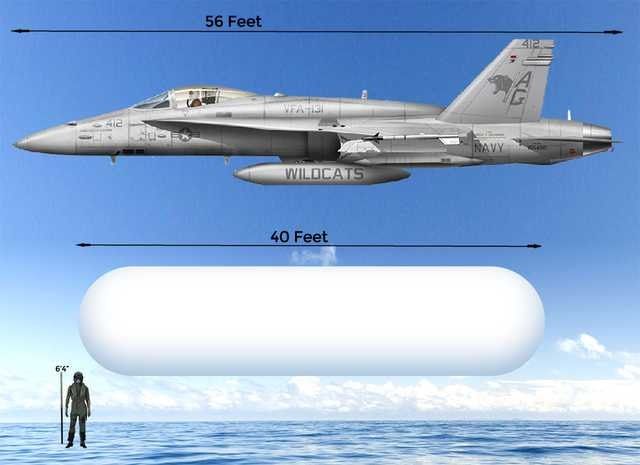
USS Nimitz 'Tic Tac' Encounter
Declassified US Navy encounter with a tic-tac shaped craft displaying impossible flight characteristics, confirmed by the Department of Defense.
Military Encountermilitary
documentation
Historical
ARCHIVE REFERENCE
2007-09-01 · Pentagon, Arlington, VA, United States
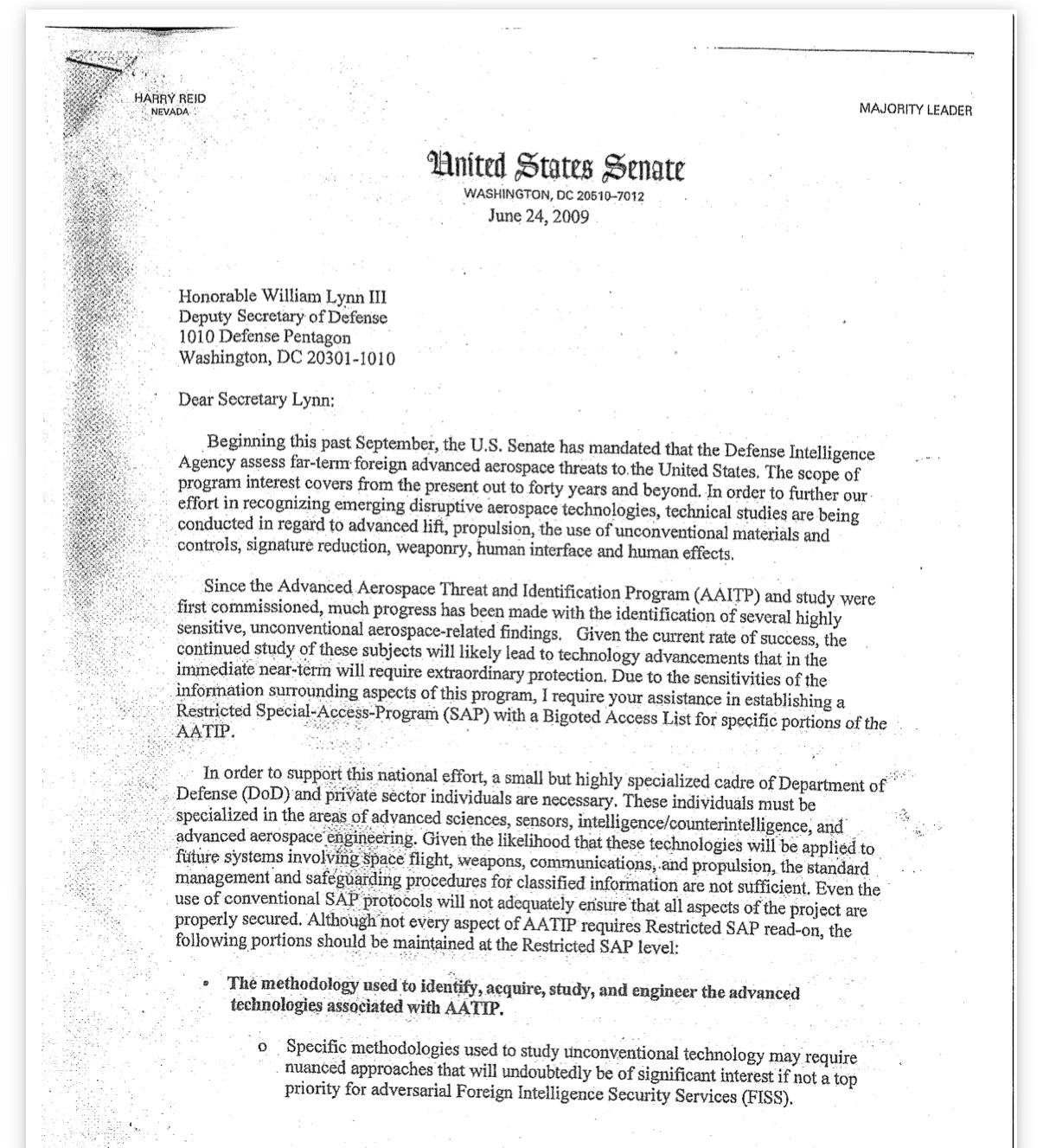
AATIP: Advanced Aerospace Threat Identification Program
Government Recordgovernment-related
video
Historical
CURATED ARCHIVE, USER UPLOAD
2015-01-21 · Atlantic Ocean off Florida, United States
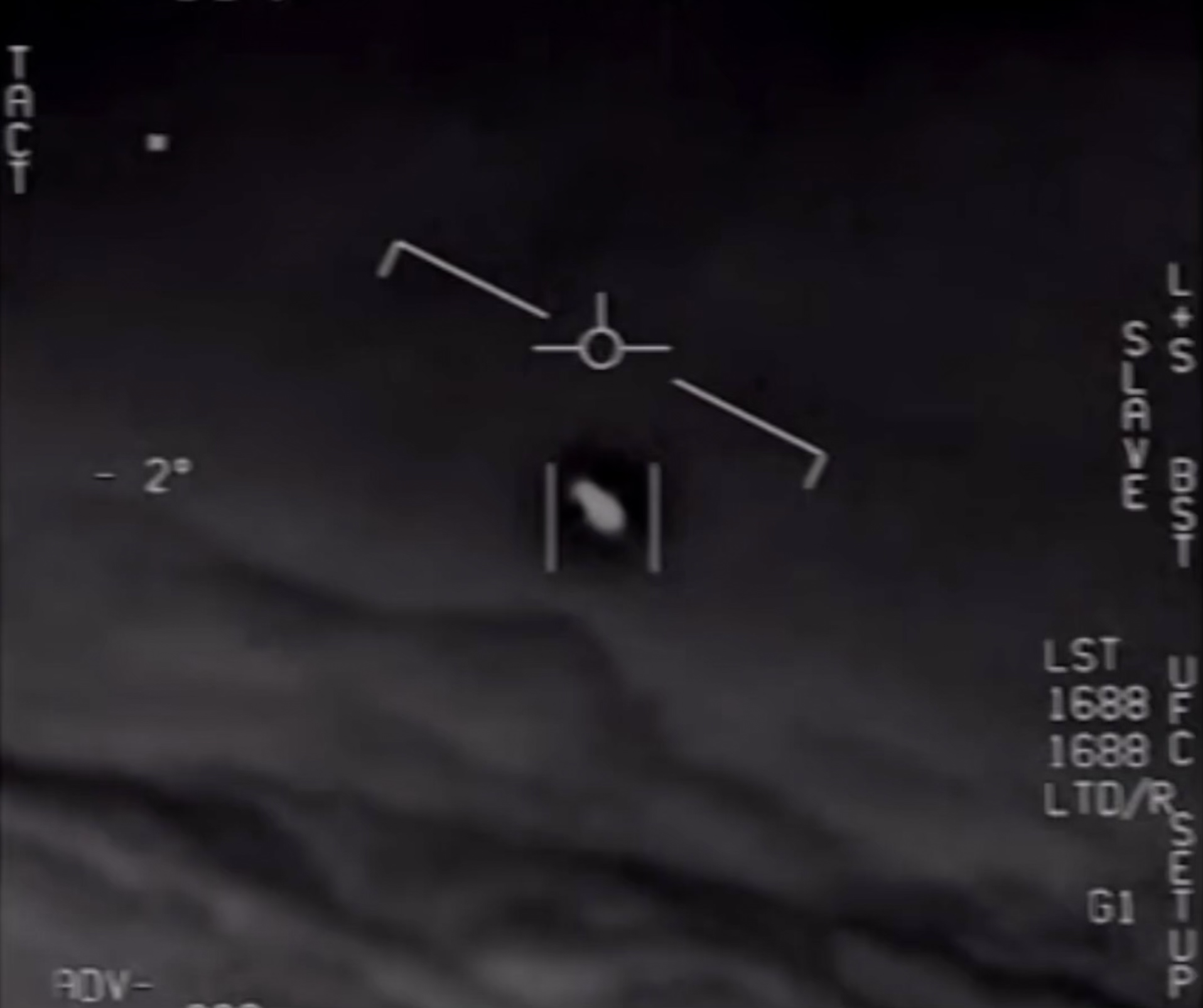
Gimbal Encounter
Military Encountermilitary
video
Historical
ARCHIVE REFERENCE
2019-07-30 · Pacific Ocean off California, United States
USS Russell Pyramid UAP
Military Encountermilitary
multiple
Historical
CURATED ARCHIVE, USER UPLOAD
1989-11-29 · Eupen, Wallonia, Belgium
Belgian UFO Wave
Military Encountermass-sighting
multiple
Historical
ARCHIVE REFERENCE
2019-07-15 · Pacific Ocean off San Diego, United States
USS Omaha UAP Swarm
Military Encountermilitary