CURATED ARCHIVE, USER UPLOAD · Curated UNVEILED archive image
Verified HistoricalMilitary Encounter#belgian-wave#triangle#military#mass-sighting#historic
Belgian UFO Wave
Date
1989-11-29
Location
Eupen, Wallonia
Witnesses
Thousands; Belgian Air Force
Type
mass-sighting
Entity
Unknown
Craft
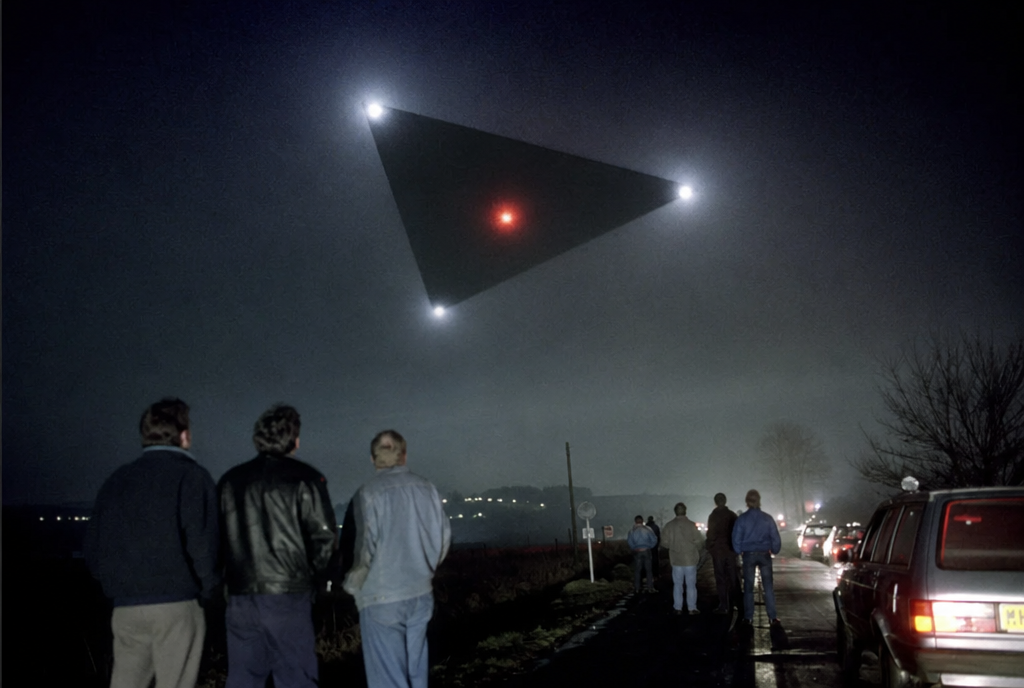
Black triangle with three lights
Evidence
multiple
Reality
physical
Evidence Index
93/100
Popularity
100/100
Community Rating
4.8 (432)
Encounter DNA
72 similar encounters discovered
Compare traits, communications, symptoms and locations.
Full Report
OPENING SCENE
Between November 1989 and April 1990, more than 13,500 people across the small country of Belgium reported seeing a slow-moving triangular craft with three bright lights at its corners and a single steady red light at its centre. The sightings were not anonymous and they were not concentrated in any one region — they came from civilians, gendarmes (Belgian national police), and on one extraordinary night, two F-16 fighter pilots whose onboard radar achieved a lock-on tracking the object through changes in altitude and speed that the Belgian Air Force could not explain. Unlike most UFO waves, the Belgian Air Force did not deny the sightings. It investigated them. And in 1990 it released its primary radar data to the public — making the Belgian Wave one of the very few large-scale UFO events where the host country's military openly cooperated with the investigation.
BACKGROUND
In late 1989 Belgium was a stable NATO member, with active Belgian Air Force radar coverage and a network of gendarmerie posts that took witness reports seriously. The wave began on the evening of November 29, 1989 in the Eupen area of eastern Belgium, near the German border, and continued in pulses for nearly five months. The most-cited single event is the night of March 30–31, 1990, when two F-16s were scrambled in response to a Belgian Gendarmerie request to confirm radar contacts also being seen visually on the ground.
TIMELINE
• November 29, 1989 (evening) — First major reports near Eupen. Multiple gendarmes radio in a slow-moving triangular craft.
• Nov 1989 – Mar 1990 — Continuing reports across Belgium, with clusters in Liège, Namur, Brabant, and Hainaut.
• March 30, 1990, ~2300 — Gendarmerie radar at Glons and Semmerzake confirm an unknown target. Belgian Air Force scrambles two F-16s from Beauvechain Air Base.
• March 30–31, 1990, 0007 — First F-16 radar lock acquired.
• 0007–0150 (approx.) — Multiple lock-on events recorded; the pilots report that the object changed altitude from approximately 7,000 ft to 5,000 ft in ~2 seconds, and at one point achieved an acceleration the F-16 could not match.
• March 31, 1990, ~0150 — F-16s break off; objects fade from radar.
• 1990 (July) — Belgian Air Force releases the radar data and analysis at a public press conference led by Colonel Wilfried De Brouwer. This is highly unusual for a NATO air force.
• 1991 — Sociétés Belges pour l'Étude des Phénomènes Spatiaux (SOBEPS) publishes its first volume of investigation.
• 1995–1997 — SOBEPS releases two follow-up volumes.
• 2011 — A "Petit-Rechain" photograph, the most-circulated visual of the wave, is publicly retracted by its photographer Patrick M., who admitted in a Belgian TV interview that it was a hoax.
KEY WITNESSES & PEOPLE
• Colonel (later Maj. Gen.) Wilfried De Brouwer — Chief of Operations, Belgian Air Force. Primary military spokesperson. Author of the Belgian Air Force public report.
• Two anonymous F-16 pilots from the 1st Wing, Beauvechain — primary in-cockpit witnesses on March 30–31, 1990.
• Belgian Gendarmerie radar operators at Glons and Semmerzake (NATO radar site).
• SOBEPS investigators — Auguste Meessen, Lucien Clerebaut and colleagues — civilian field investigation.
LOCATION
Across Belgium, with the Eupen / Liège / Brabant area as the highest-density zone. Approximate central coordinates: 50.85°N, 4.35°E (Belgian capital region).
DATES & TIME PERIOD
Active wave: November 29, 1989 – April 1990. The headline F-16 event: night of March 30–31, 1990.
SOURCE HISTORY
The Belgian Wave is unusual because it has three independent, large-scale source channels:
1. Belgian Air Force radar and pilot data, made public by Col. De Brouwer in 1990.
2. Civilian SOBEPS multi-volume investigation (1991–1997).
3. Gendarmerie incident logs — hundreds of officer reports, many of which include the officer's name, badge number, and unit.
EVIDENCE SUMMARY
• Witness count: ~13,500 official reports filed, of which ~2,600 were judged by SOBEPS to be "credible" and "internally consistent."
• Radar tracks: Yes, multiple independent military and gendarmerie radars.
• F-16 lock-ons: Yes, multiple recorded lock-on events on the night of March 30–31, 1990.
• Photographs and video: Largely poor quality; the famous "Petit-Rechain" photograph has been retracted by its creator (see Disputed below).
• Physical traces: None recovered.
• Government investigation: Belgian Air Force investigation; public release.
MEDIA SUMMARY
A small number of low-quality photographs exist; the most famous (the "Petit-Rechain" image taken by Patrick M.) was retracted as a hoax by the photographer in 2011. No verified clear photograph or video of the craft has ever surfaced.
OFFICIAL RECORDS
• Belgian Air Force public report and press conference, July 1990 (De Brouwer).
• Gendarmerie radar tapes and incident logs.
• SOBEPS investigation files (transferred to the University of Liège archives in the 2010s).
• De Brouwer's later UAP-disclosure interventions in NATO discussions (2007 onward).
MAJOR CLAIMS
• Thousands of witnesses across five months consistently described the same general object: a large dark triangular craft with bright lights at three corners and a central red light.
• On the night of March 30–31, 1990, two F-16 jets achieved multiple radar lock-ons that exhibited extreme acceleration and altitude changes.
• The Belgian Air Force was unable to identify the objects with any then-known aircraft.
SKEPTICAL EXPLANATIONS
• Misidentified U.S. stealth aircraft (F-117 or alleged "TR-3B"): The most-cited alternative explanation is that some of the reports were sightings of U.S. stealth aircraft operating over Belgian airspace as part of NATO exercises. The U.S. and Belgian governments have officially denied this.
• Mass-misperception of conventional aircraft + helicopters in unusual lighting configurations.
• Radar anomalies due to ducting in the upper atmosphere on the night of March 30–31, 1990. The Belgian Air Force radar specialists publicly considered and rejected this explanation, citing the consistency of the tracks across multiple stations.
DISPUTED DETAILS
• The exact velocity and acceleration figures reported by the F-16 pilots — some sources state up to 40 g, others much less. The Belgian Air Force final report leaves the exact peak figures ambiguous.
• The single most-published photograph (Petit-Rechain, April 1990) is now retracted as a hoax by the photographer himself.
• Whether U.S. stealth aircraft were in fact present is officially denied by both governments and remains an unresolved alternative hypothesis.
DIFFERENT PERSPECTIVES
• Belgian Air Force position (1990): The objects were tracked but cannot be identified.
• Skeptic position (Auguste Meessen privately, Mick West publicly): A combination of weather phenomena, civilian misperceptions, and possibly classified NATO aircraft.
• UFOlogist position: One of the cleanest large-scale modern UAP cases — multi-radar, multi-witness, military cooperation.
LATER DEVELOPMENTS
• 1997 — SOBEPS publishes its final volume.
• 2007 — De Brouwer participates in the National Press Club UAP forum, reaffirms his position.
• 2011 — Petit-Rechain photograph retracted by its photographer.
• 2024 — Belgian and NATO archives partially declassified; SOBEPS papers archived at the University of Liège.
CULTURAL IMPACT
The Belgian Wave is the canonical European UAP case of the Cold War era and a touchstone for arguments about responsible government engagement with UAP. The Belgian Air Force's 1990 press conference is often cited as the modern gold standard for military transparency on the subject.
RELATED CASES
• Hudson Valley UFO Wave (1980s, US northeast) — earlier large-formation triangle wave.
• Phoenix Lights (1997) — V-formation case with similar witness density.
• Rendlesham Forest (1980) — European NATO case.
REFERENCES & SOURCES
• De Brouwer, Col. Wilfried. Belgian Air Force press conference, July 11, 1990.
• SOBEPS. "Vague d'OVNI sur la Belgique," Vols. 1–3 (1991–1997).
• Sturrock, Peter A. "The UFO Enigma: A New Review of the Physical Evidence" (Warner Books, 1999) — Belgian Wave summary.
• Belgian Gendarmerie incident reports (declassified series).
Witness Discussion1
Sign in to discuss this dossier and vote on the archive.
Log in0

The radar-visual on F-16 lock-and-break is documentary-grade evidence. The Belgian Air Force's own report is publicly available, read the source.
Similar Cases
documentation
Historical
ARCHIVE REFERENCE
2007-09-01 · Pentagon, Arlington, VA, United States
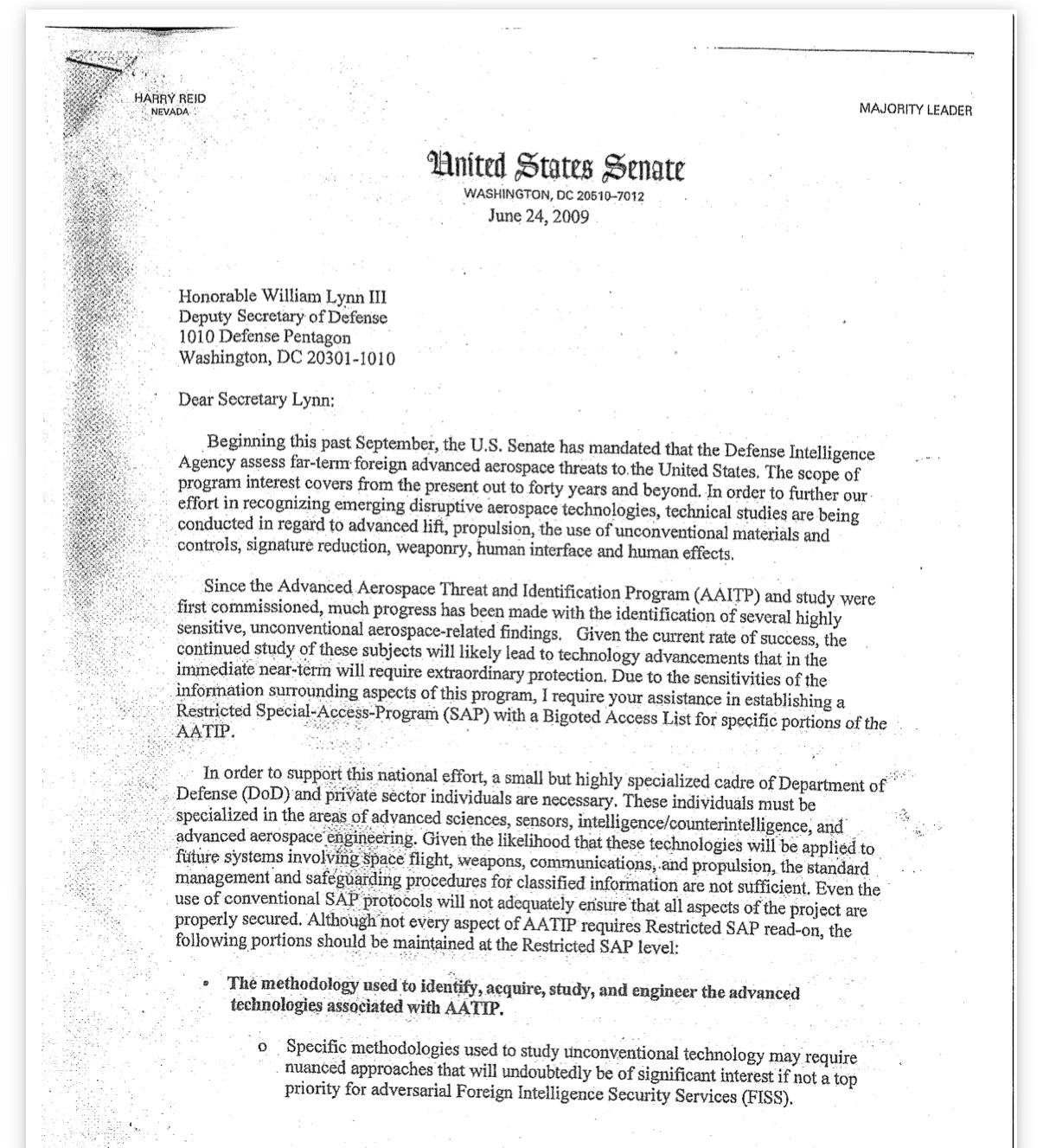
AATIP: Advanced Aerospace Threat Identification Program
Government Recordgovernment-related
video
Historical
CURATED ARCHIVE, USER UPLOAD
2004-11-14 · Pacific Ocean off San Diego, United States
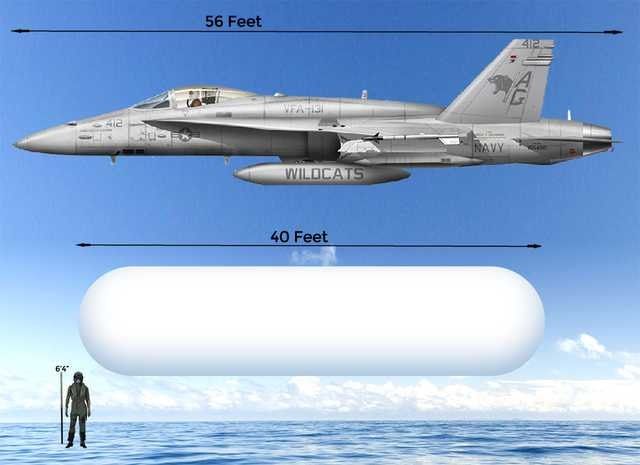
USS Nimitz 'Tic Tac' Encounter
Declassified US Navy encounter with a tic-tac shaped craft displaying impossible flight characteristics, confirmed by the Department of Defense.
Military Encountermilitary
video
Historical
CURATED ARCHIVE, USER UPLOAD
2015-01-21 · Atlantic Ocean off Florida, United States
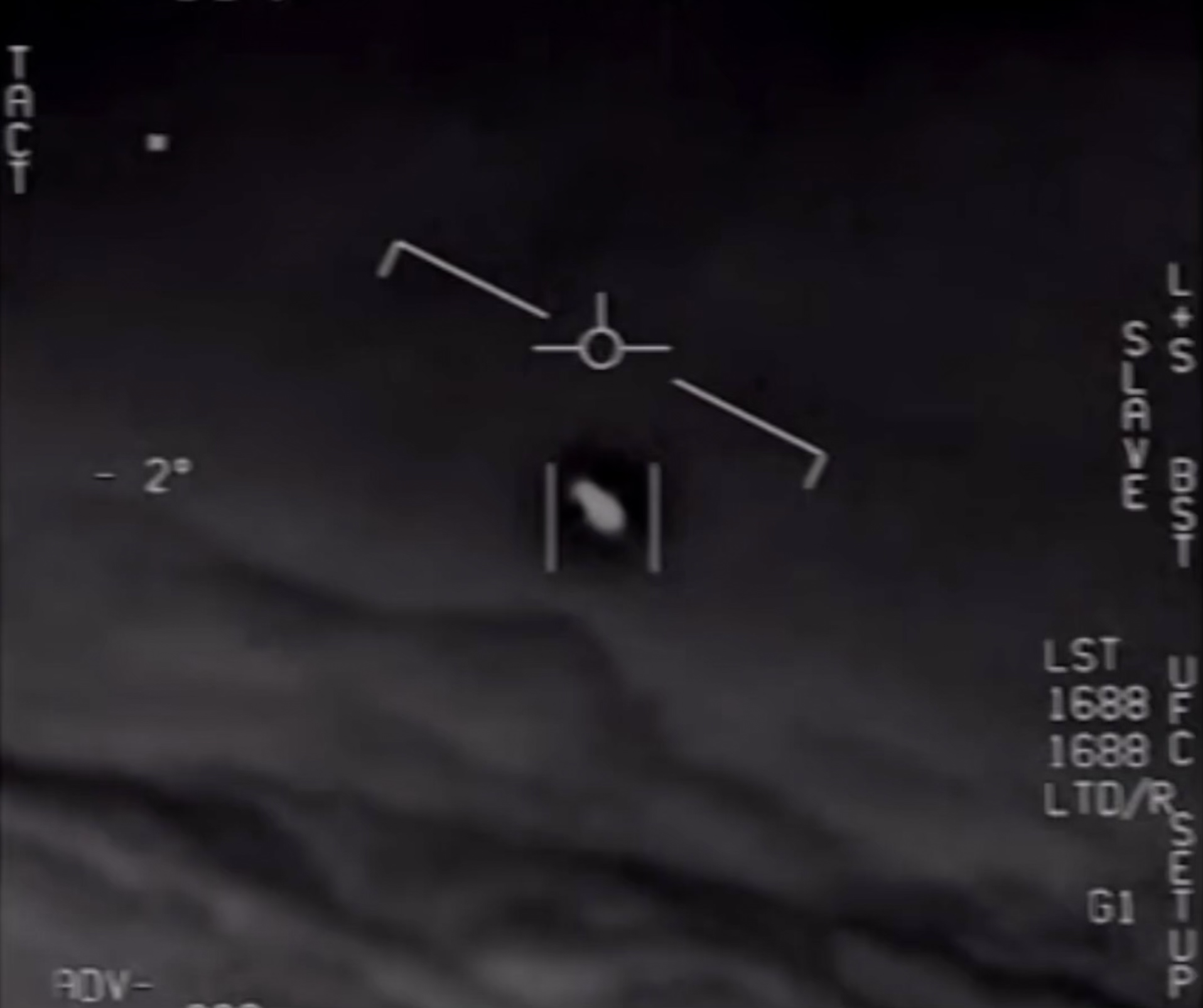
Gimbal Encounter
Military Encountermilitary
video
Historical
ARCHIVE REFERENCE
2019-07-30 · Pacific Ocean off California, United States
USS Russell Pyramid UAP
Military Encountermilitary
multiple
Historical
ARCHIVE REFERENCE
2019-07-15 · Pacific Ocean off San Diego, United States
USS Omaha UAP Swarm
Military Encountermilitary
multiple
Historical
CURATED ARCHIVE, USER UPLOAD
1976-09-19 · Tehran, Iran
Tehran F-4 Incident
Military Encountermilitary