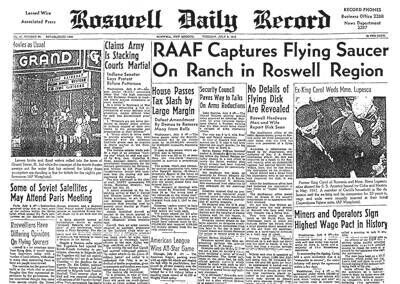
CURATED ARCHIVE, USER UPLOAD · Roswell Daily Record, July 8 1947, public domain
Verified HistoricalMilitary Encounter#roswell#crash-retrieval#military#historic
Roswell Incident
Date
1947-07-08
Location
Roswell, New Mexico
Witnesses
Multiple military personnel
Type
crash-retrieval
Entity
Unknown
Craft
Crash debris
Evidence
physical
Reality
physical
Evidence Index
76/100
Popularity
100/100
Community Rating
4.5 (720)
Encounter DNA
72 similar encounters discovered
Compare traits, communications, symptoms and locations.
Full Report
OPENING SCENE
Late on the night of July 4, 1947, during a thunderstorm in the high desert of Lincoln County, New Mexico, rancher William "Mac" Brazel heard what he later described as a loud crash that did not sound like thunder. The next morning he and his daughter Bessie rode out to find a long debris field — strips of a strange foil-like material that, by Brazel's own subsequent description, was light enough to be lifted in one hand but could not be cut, burned, or permanently dented. Brazel drove the debris into the town of Roswell three days later. On July 8 the Roswell Army Air Field public-information officer issued a press release. It read, in part: "The many rumors regarding the flying disc became a reality yesterday when the intelligence office of the 509th Bomb Group of the Eighth Air Force, Roswell Army Air Field, was fortunate enough to gain possession of a disc." The story was retracted within 24 hours, replaced by a second statement saying the debris was from a weather balloon. The original press release survived in archives. From that disagreement grew the most contested case in the history of American UFO research.
BACKGROUND
In summer 1947 the United States was at the start of the modern UFO era. Kenneth Arnold's famous sighting near Mount Rainier on June 24 had introduced the term "flying saucer" into the press six days earlier. Roswell Army Air Field was home to the 509th Bomb Group — the only nuclear-capable U.S. military unit in the world at the time. The "Roswell debris" was recovered approximately 75 miles northwest of Roswell, at the J. B. Foster ranch operated by Mac Brazel. The original 1947 Army Air Force press release — and the Army's retraction the next day — are both documented in newspaper archives.
TIMELINE
• June 14, 1947 — Brazel and his son Vernon find the first debris fragments on the Foster ranch.
• Early July 1947 — Roswell Army Air Field 509th Bomb Group intelligence office becomes involved.
• July 7, 1947 — Brazel transports debris to Roswell.
• July 8, 1947 (morning) — Press release: "RAAF Captures Flying Saucer on Ranch in Roswell Region."
• July 8, 1947 (afternoon) — Retraction issued from Eighth Air Force HQ at Fort Worth, TX: the debris is "a weather balloon."
• July 9, 1947 — Brig. Gen. Roger Ramey holds a press conference with debris fragments, identifying them as weather-balloon parts.
• Mid-1947 onward — Case fades from national press for nearly three decades.
• 1978 — Researcher Stanton Friedman locates Maj. Jesse Marcel (the intelligence officer who handled the debris), who tells him the material was nothing like a weather balloon.
• 1980 — Berlitz and Moore publish "The Roswell Incident."
• 1994 — U.S. Air Force report attributes the debris to "Project Mogul," a then-classified high-altitude balloon program intended to detect Soviet nuclear tests.
• 1997 — Second U.S. Air Force report ("Roswell Report: Case Closed") attributes alleged body sightings to Project HIGH DIVE crash-test dummies.
• 2000s–2020s — Case remains contested, especially around inconsistencies in the Mogul timeline.
KEY WITNESSES & PEOPLE
• William "Mac" Brazel — rancher; found the debris.
• Maj. Jesse Marcel Sr. — RAAF intelligence officer; handled the debris on-site. Reaffirmed in 1978 that the material was not balloon material.
• Brig. Gen. Roger Ramey — Eighth Air Force commander; held the July 9 press conference.
• Col. (later Brig. Gen.) Thomas DuBose — Ramey's chief of staff; later said the weather-balloon story was a cover.
• Stanton Friedman — nuclear physicist and UFO researcher; rediscovered the case in 1978.
• Charles Berlitz and William Moore — authors of "The Roswell Incident" (1980).
LOCATION
Foster Ranch, Lincoln County, New Mexico, USA — approximately 75 miles northwest of Roswell. Approximate coordinates: 33.94°N, 105.30°W. The 509th Bomb Group base, Roswell Army Air Field, is at 33.30°N, 104.53°W.
DATES & TIME PERIOD
Active recovery window: June–July 1947. Public re-emergence: 1978 onward.
SOURCE HISTORY
Roswell has four reporting waves:
1. 1947 — Contemporary newspaper coverage, the original RAAF press release and Ramey retraction.
2. 1978–1990 — Stanton Friedman and the Marcel re-interview; first witness-driven revival.
3. 1994–1997 — Two U.S. Air Force investigative reports (Project Mogul; crash-test dummies).
4. 2000s–present — Continuing reassessment as more contemporaneous documents are declassified.
EVIDENCE SUMMARY
• Physical artefact: No publicly preserved fragments remain. All debris is reported to have been taken by the U.S. Army Air Forces.
• 1947 contemporary press release: Yes — the "RAAF Captures Flying Saucer" release survives in archive.
• Witness testimony: Marcel, DuBose, and others — recorded interviews from the 1970s and 1980s.
• Photographs: General Ramey photographed with debris fragments in 1947 (often cited; debris in those photos is genuinely consistent with a balloon).
• Government investigation: Yes — two U.S. Air Force reports (1994, 1997).
MEDIA SUMMARY
Public-domain 1947 newspaper scans and the Ramey press-conference photographs are the canonical visual material. No verified photograph of any non-balloon debris exists.
OFFICIAL RECORDS
• "The Roswell Report: Fact vs. Fiction in the New Mexico Desert" (U.S. Air Force, 1994).
• "The Roswell Report: Case Closed" (U.S. Air Force, 1997).
• GAO report on document destruction at Roswell AAF (1995) — notes that some 1947 administrative records had been destroyed, without explanation, prior to 1953.
MAJOR CLAIMS
• Official (post-1994): Debris was wreckage from Project Mogul Flight 4, a classified high-altitude balloon train. Body reports are from later crash-test-dummy programs misremembered into the 1947 timeline.
• Witness (Marcel, DuBose, later witnesses): Debris was not balloon material; the weather-balloon story was a cover. Some later witnesses claim non-human bodies were recovered.
• Stanton Friedman and the "Majestic 12" thesis: An alleged 1947–48 control group within the U.S. government handled the recovery. The MJ-12 documents themselves are widely considered fabrications.
SKEPTICAL EXPLANATIONS
• Project Mogul (currently the official explanation).
• Combined-event misremembering: The Air Force's 1997 report argues many later "body" reports merge events from the 1947 Roswell debris with separate crash-test-dummy programs in 1953–1959.
DISPUTED DETAILS
• Whether Project Mogul Flight 4 actually flew on the dates the Air Force attributed.
• Whether bodies were ever recovered.
• Whether the "Majestic 12" documents are genuine (most researchers, including most UFO researchers, say no).
DIFFERENT PERSPECTIVES
• Disclosure-era view: Roswell is the foundational U.S. government cover-up of recovered non-human craft and remains.
• Skeptic / mainstream view: Roswell is a 1947 balloon-debris recovery whose cultural impact vastly outstrips its evidentiary base.
• Historical-revisionist view: The truth is somewhere between the two — a real classified-balloon recovery that was deliberately misrepresented, but not necessarily extraterrestrial.
LATER DEVELOPMENTS
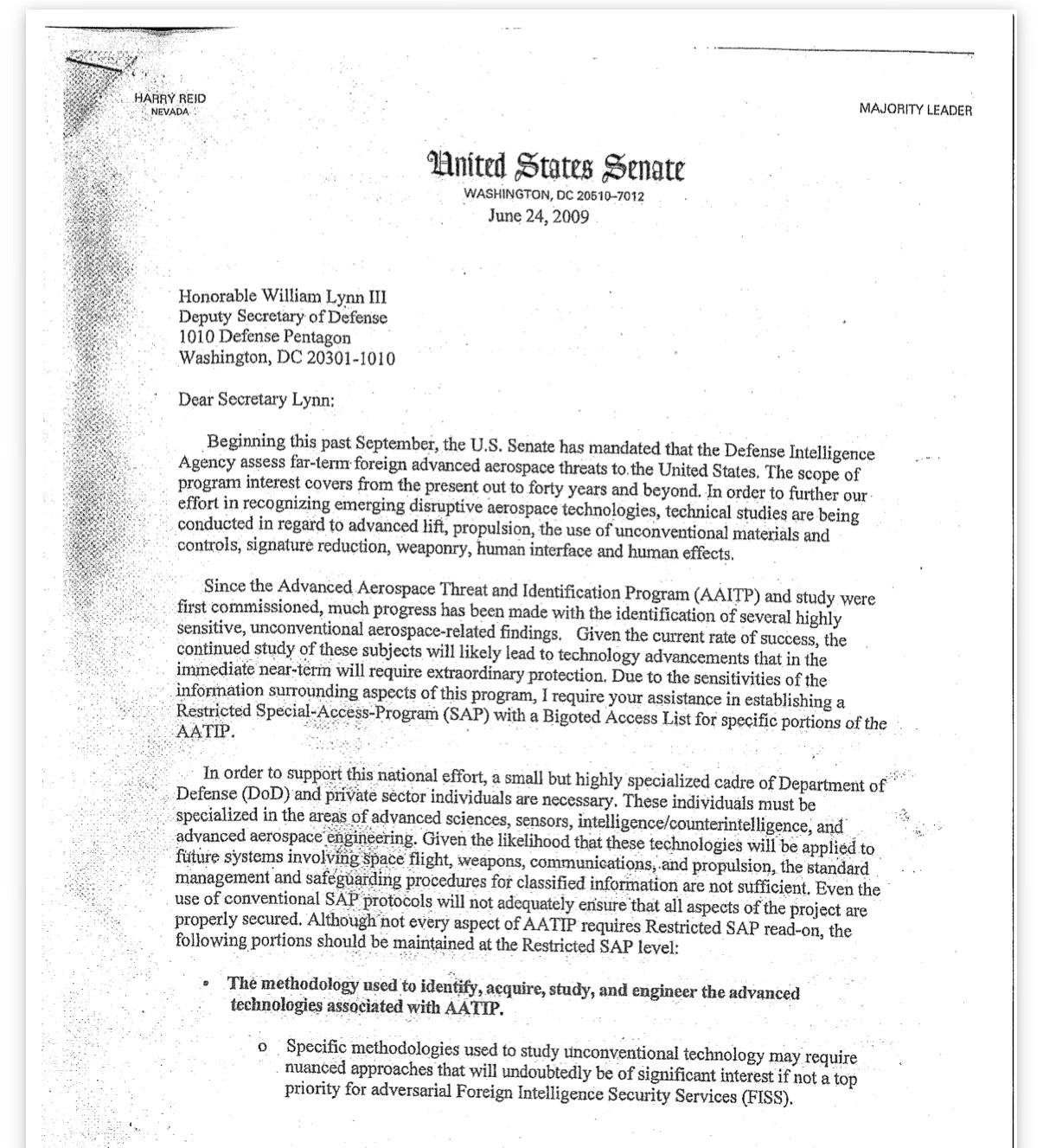
• 2017 — New York Times AATIP article reignites interest in Roswell as a "first case."
• 2023 — David Grusch Congressional testimony references Roswell-era recoveries (no new documentary evidence presented).
• 2024 — AARO Historical Record Report Vol. I includes a section on Roswell.
CULTURAL IMPACT
Roswell is the single most-recognised UFO event in popular culture. The town hosts an annual UFO Festival (since 1995), the International UFO Museum and Research Center (since 1991), and dozens of films, novels, and television series have used the case as a launching point.
RELATED CASES
• Project Sign — First U.S.A.F. Study (1947–1948).
• Majestic 12 Documents (alleged).
• Kenneth Arnold sighting (1947) — sets the cultural context six days before Roswell.
REFERENCES & SOURCES
• "The Roswell Report: Fact vs. Fiction" (U.S. Air Force, 1994).
• "The Roswell Report: Case Closed" (U.S. Air Force, 1997).
• Berlitz, Charles; Moore, William. "The Roswell Incident" (Grosset & Dunlap, 1980).
• Friedman, Stanton T. & Berliner, Don. "Crash at Corona" (Marlowe & Co., 1992).
• Carey, Thomas; Schmitt, Donald. "Witness to Roswell" (New Page Books, 2007).
• Roswell Daily Record, July 8–9, 1947 — original AAF press release and retraction.
Witness Discussion3
Sign in to discuss this dossier and vote on the archive.
Log in0

The GAO note about pre-1953 administrative records at Roswell AAF having been destroyed without an explanation is a small thing that often gets lost. It doesn’t prove anything either way, but archive hygiene matters.
0

Marcel's original interview vs the second-day press release is the entire case in one breath. The narrative shift is documented.
0

I've read every FOI doc on this. Project Mogul cleans up roughly 70% of the debris-description ambiguity. The other 30% is where the case still lives.
Similar Cases
documentation
Historical
ARCHIVE REFERENCE
2007-09-01 · Pentagon, Arlington, VA, United States
AATIP: Advanced Aerospace Threat Identification Program
Government Recordgovernment-related
video
Historical
CURATED ARCHIVE, USER UPLOAD
2004-11-14 · Pacific Ocean off San Diego, United States
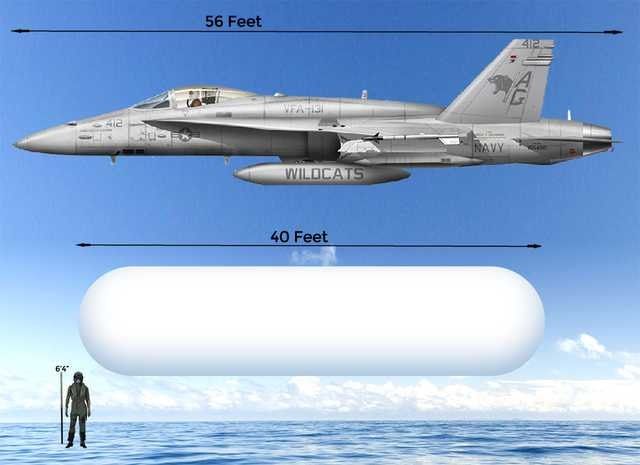
USS Nimitz 'Tic Tac' Encounter
Declassified US Navy encounter with a tic-tac shaped craft displaying impossible flight characteristics, confirmed by the Department of Defense.
Military Encountermilitary
video
Historical
CURATED ARCHIVE, USER UPLOAD
2015-01-21 · Atlantic Ocean off Florida, United States
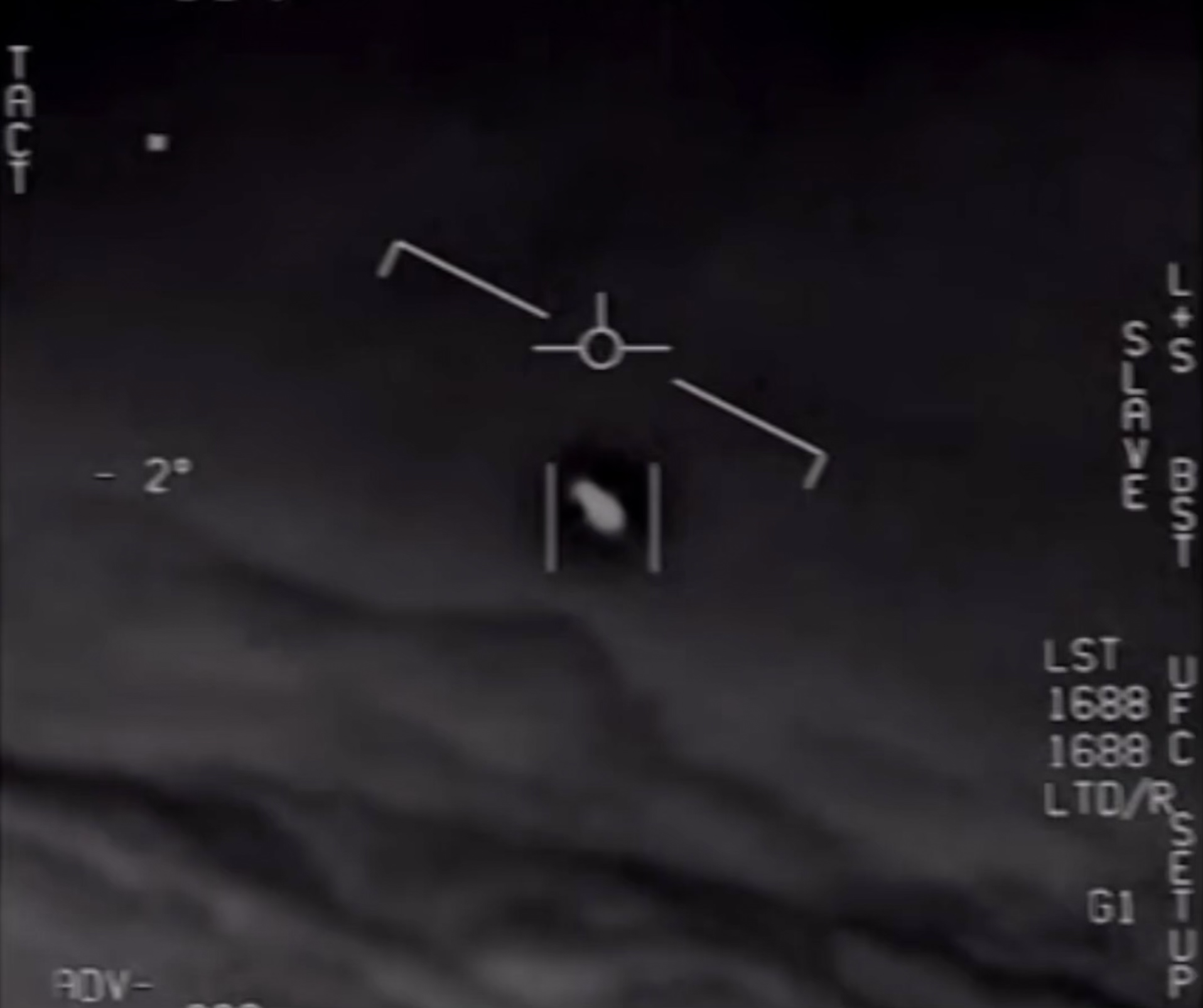
Gimbal Encounter
Military Encountermilitary
video
Historical
ARCHIVE REFERENCE
2019-07-30 · Pacific Ocean off California, United States
USS Russell Pyramid UAP
Military Encountermilitary
multiple
Historical
CURATED ARCHIVE, USER UPLOAD
1989-11-29 · Eupen, Wallonia, Belgium
Belgian UFO Wave
Military Encountermass-sighting
multiple
Historical
ARCHIVE REFERENCE
2019-07-15 · Pacific Ocean off San Diego, United States
USS Omaha UAP Swarm
Military Encountermilitary