
CURATED ARCHIVE, USER UPLOAD · Curated UNVEILED archive image
Verified HistoricalGovernment Record#project-grudge#government#historic#usaf
Project Grudge
Date
1949-02-11
Location
Wright-Patterson AFB, Ohio
Witnesses
USAF analysts
Type
government-related
Entity
Unknown
Craft
—
Evidence
documentation
Reality
physical
Evidence Index
82/100
Popularity
100/100
Community Rating
4.3 (78)
Encounter DNA
72 similar encounters discovered
Compare traits, communications, symptoms and locations.
Full Report
OPENING SCENE
On February 11, 1949, with little public announcement, the United States Air Force renamed its first UFO investigation from Project Sign to Project Grudge. The change was administrative on paper. In practice — as Captain Edward Ruppelt would later write — it was the moment when serious official UFO investigation became institutionally disfavoured inside the U.S. military, when the project's mission shifted from "figure out what these things are" to "find a conventional explanation, and if you can't, file the case and move on." Project Grudge lasted from February 1949 to March 1952. It analysed approximately 244 cases. Most were closed quickly as conventional explanations. Captain Ruppelt — who took over the successor project, Blue Book, in 1952 — would later describe Grudge in his memoir as "the dark ages of Air Force UFO investigation."
BACKGROUND
Project Grudge inherited Project Sign's filing system, scientific consultant (Dr. J. Allen Hynek), and physical office at the Air Materiel Command at Wright Field, Dayton, Ohio. Its first project director was Lt. Col. Hemstead, succeeded by Lt. Jerry Cummings. The shift in posture from Sign's open inquiry to Grudge's skeptical default was driven, in Ruppelt's account, by Gen. Hoyt Vandenberg's rejection of the Estimate of the Situation in late 1948.
TIMELINE
• Feb 11, 1949 — Project Sign reorganised as Project Grudge.
• April 1949 — Project Grudge issues "Technical Report 102: Unidentified Aerial Objects" (often called the "Grudge Report"), which publicly concludes that UFO sightings are misperceptions, hoaxes, or known phenomena. Public availability is limited.
• Aug 1949 – 1950 — Grudge case load shrinks. Some staff are reassigned. The project briefly becomes nearly dormant.
• 1951 — A bright resurgence of UFO reports nationally forces Grudge to be re-staffed. Lt. Jerry Cummings becomes director.
• Late 1951 — Cummings briefs senior Air Force leadership that Grudge has been inadequate.
• Dec 1951 — Project Grudge is reorganised into a more active form (the "New Project Grudge") under Capt. Edward Ruppelt.
• March 1952 — The reorganised project is renamed Project Blue Book.
KEY PEOPLE
• Lt. Col. Hemstead — first Grudge director.
• Lt. Jerry Cummings — director 1951–52, instrumental in the project's reform.
• Capt. Edward J. Ruppelt — Cummings' successor; led the transition to Blue Book.
• Dr. J. Allen Hynek — continuing scientific consultant.
• Donald Keyhoe — independent investigator and former U.S. Marine Major; his 1950 article "The Flying Saucers Are Real" (True magazine) is a public counter-narrative to the Grudge posture.
LOCATION
Air Materiel Command, Wright Field / Wright-Patterson AFB, Dayton, Ohio, USA.
DATES & TIME PERIOD
February 11, 1949 – March 1952 (~37 months).
SOURCE HISTORY
The Grudge case files (~244) are preserved in the Project Blue Book collection at NARA. The "Grudge Report" (Technical Report 102) is preserved and accessible. The most-cited insider history is, again, Ruppelt's "Report on Unidentified Flying Objects" (1956).
EVIDENCE SUMMARY
• Cases analysed: ~244.
• Internal conclusion: most cases explained as misperception or hoax; a residual percentage unexplained.
• Grudge Report (1949): public-facing version of the skeptical default conclusion.
• Photographs and witness statements: thousands of pages preserved in the Blue Book archive.
MEDIA SUMMARY
No iconic visual material from Grudge specifically. The Grudge Report cover page and Ruppelt's later book are the most-cited imagery.
OFFICIAL RECORDS
• Technical Report 102, "Project Grudge," April 1949 (declassified).
• Grudge case files in the Blue Book collection, NARA Record Group 341.
MAJOR CLAIMS
• Project Grudge replaced Project Sign in 1949 with a deliberately skeptical posture.
• The April 1949 Grudge Report publicly concluded UFOs were misperceptions or hoaxes.
• Donald Keyhoe's "The Flying Saucers Are Real" (1950) is the first widely-read independent challenge to that conclusion.
• Grudge was reformed in late 1951 and renamed Blue Book in March 1952.
SKEPTICAL EXPLANATIONS
The skeptic position is essentially the official Grudge position: most UFO sightings are misperceptions, hoaxes, or known phenomena. The historical debate is about whether Grudge's institutional posture biased the investigation in advance.
DISPUTED DETAILS
• Whether the April 1949 Grudge Report fairly reflected the underlying case data.
• Whether the project's near-dormancy in 1949–1950 was a consequence of low case load or of deliberate de-prioritisation.
• Whether Donald Keyhoe's 1950 article materially influenced the project's later reform.
DIFFERENT PERSPECTIVES
• U.S. Air Force view: Grudge was a normal scaling-down of a project whose initial energy had not been matched by evidence.
• Ruppelt view: Grudge was the institutional low point of U.S. UFO investigation, and required active reform to become Blue Book.
• Historian view (Clark, Hall): The Sign→Grudge→Blue Book progression illustrates how institutional posture, more than evidence, drove the official U.S. response.
LATER DEVELOPMENTS
• March 1952 — Grudge becomes Project Blue Book.
• 1956 — Ruppelt's book documents Grudge's institutional weaknesses.
• 1969 — Project Blue Book closes.
CULTURAL IMPACT
Project Grudge is the historical "interregnum" between Sign and Blue Book. It is rarely discussed on its own but is institutionally important: it shows that the U.S. government's UFO posture is not stable across decades, and that the institutional disposition can swing significantly.
RELATED CASES
• Project Sign (1947–48) — predecessor.
• Project Blue Book (1952–69) — successor.
• Donald Keyhoe's "The Flying Saucers Are Real" (True magazine, 1950) — public counter-narrative.
REFERENCES & SOURCES
• Ruppelt, Edward J. "The Report on Unidentified Flying Objects" (Doubleday, 1956), Chapter 5.
• Technical Report 102, Project Grudge, U.S. Air Force, April 1949.
• Keyhoe, Donald. "The Flying Saucers Are Real" (Fawcett, 1950).
• Clark, Jerome. "The UFO Encyclopedia, 2nd ed." (Omnigraphics, 1998).
• Project Grudge case files, NARA Record Group 341.
Witness Discussion0
Sign in to discuss this dossier and vote on the archive.
Log inNo discussion yet. Be the first to weigh in.
Similar Cases
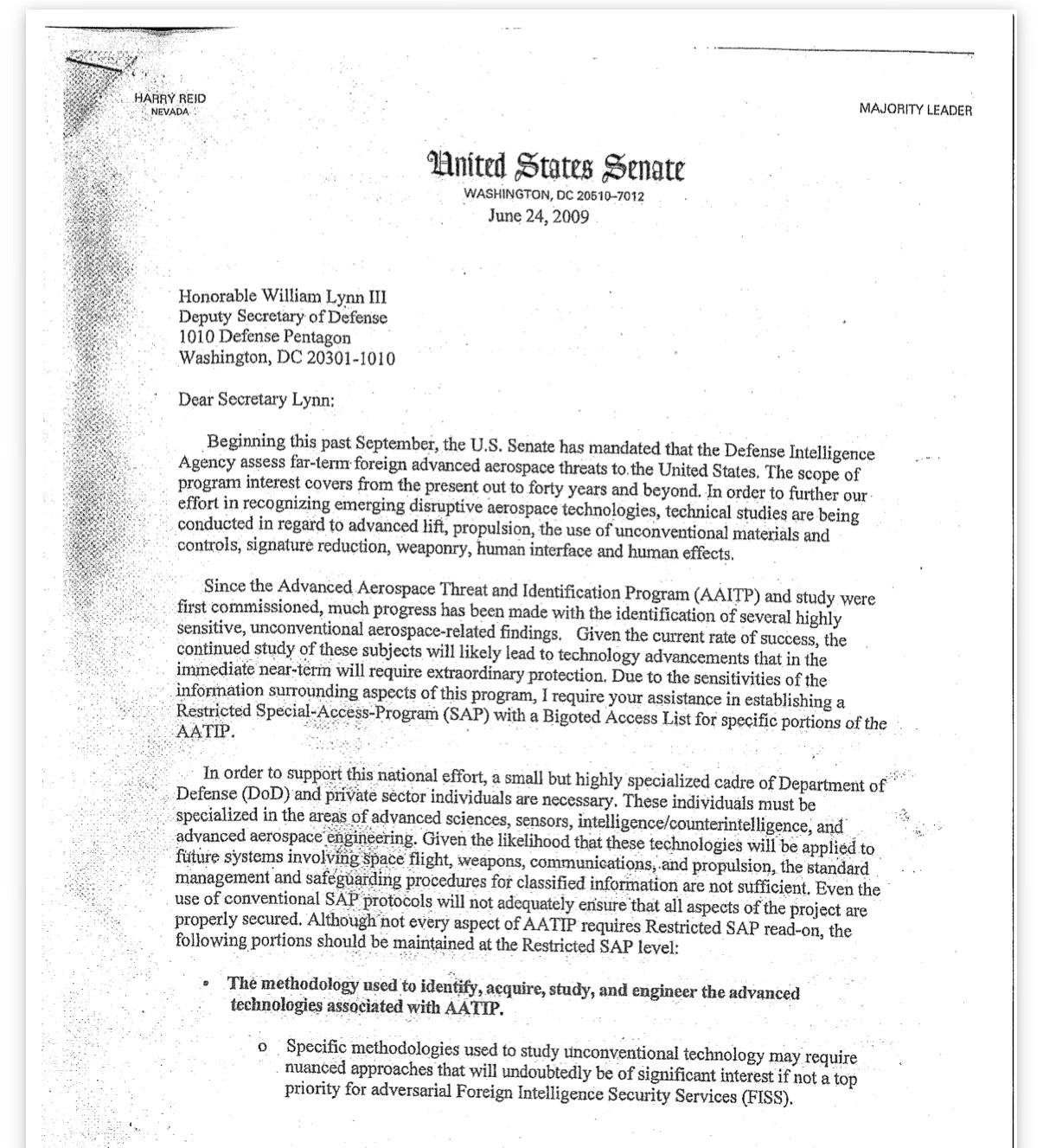
documentation
Historical
ARCHIVE REFERENCE
2007-09-01 · Pentagon, Arlington, VA, United States
AATIP: Advanced Aerospace Threat Identification Program
Government Recordgovernment-related
multiple
Historical
CURATED ARCHIVE, USER UPLOAD
1989-11-29 · Eupen, Wallonia, Belgium
Belgian UFO Wave
Military Encountermass-sighting
multiple
Historical
CURATED ARCHIVE, USER UPLOAD
1976-09-19 · Tehran, Iran
Tehran F-4 Incident
Military Encountermilitary
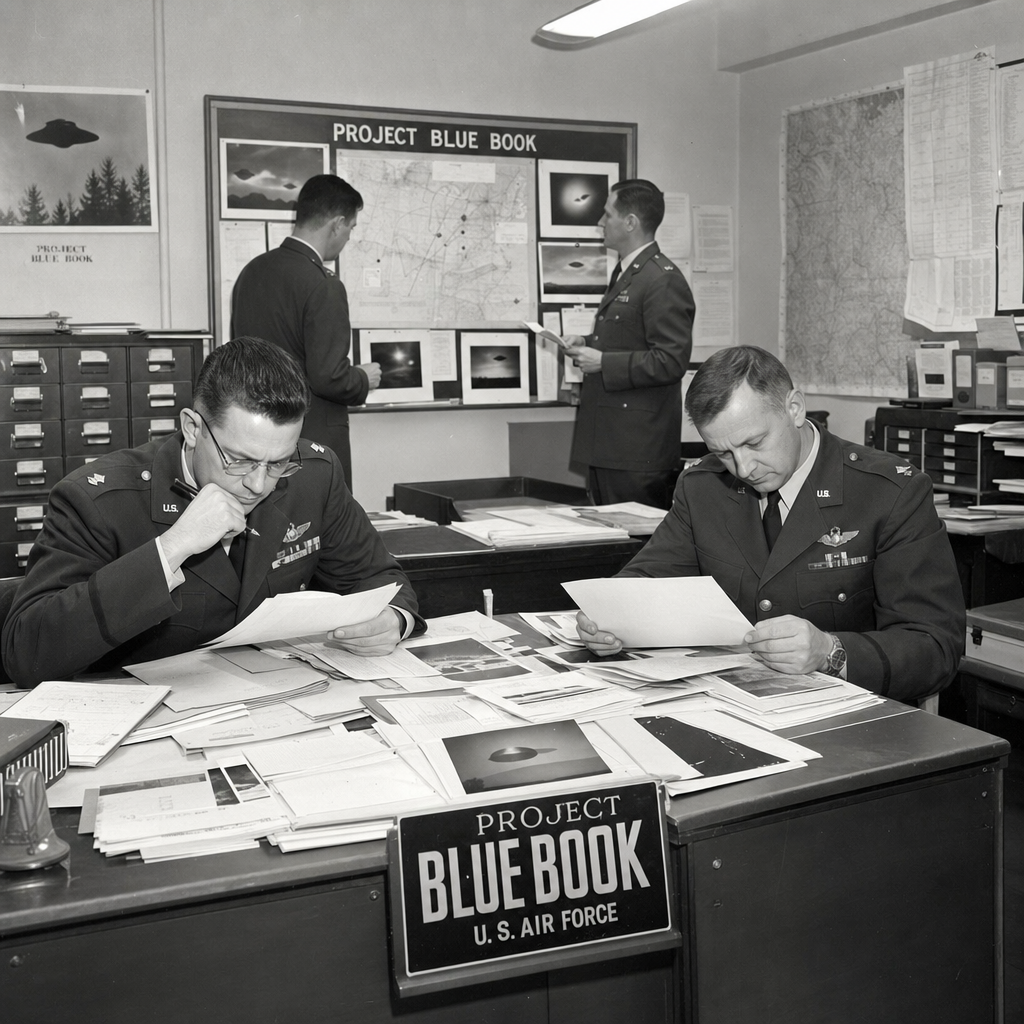
multiple
Historical
CURATED ARCHIVE, USER UPLOAD
1952-03-25 · Wright-Patterson AFB, Ohio, United States
Project Blue Book
Government Recordgovernment-related
multiple
Historical
CURATED ARCHIVE, USER UPLOAD
1967-10-04 · Shag Harbour, Nova Scotia, Canada
Shag Harbour Crash
Military Encountercrash-retrieval

multiple
Historical
CURATED ARCHIVE, USER UPLOAD
1986-11-17 · Eastern Alaska airspace, United States
JAL Flight 1628 Encounter
Government Recordmilitary