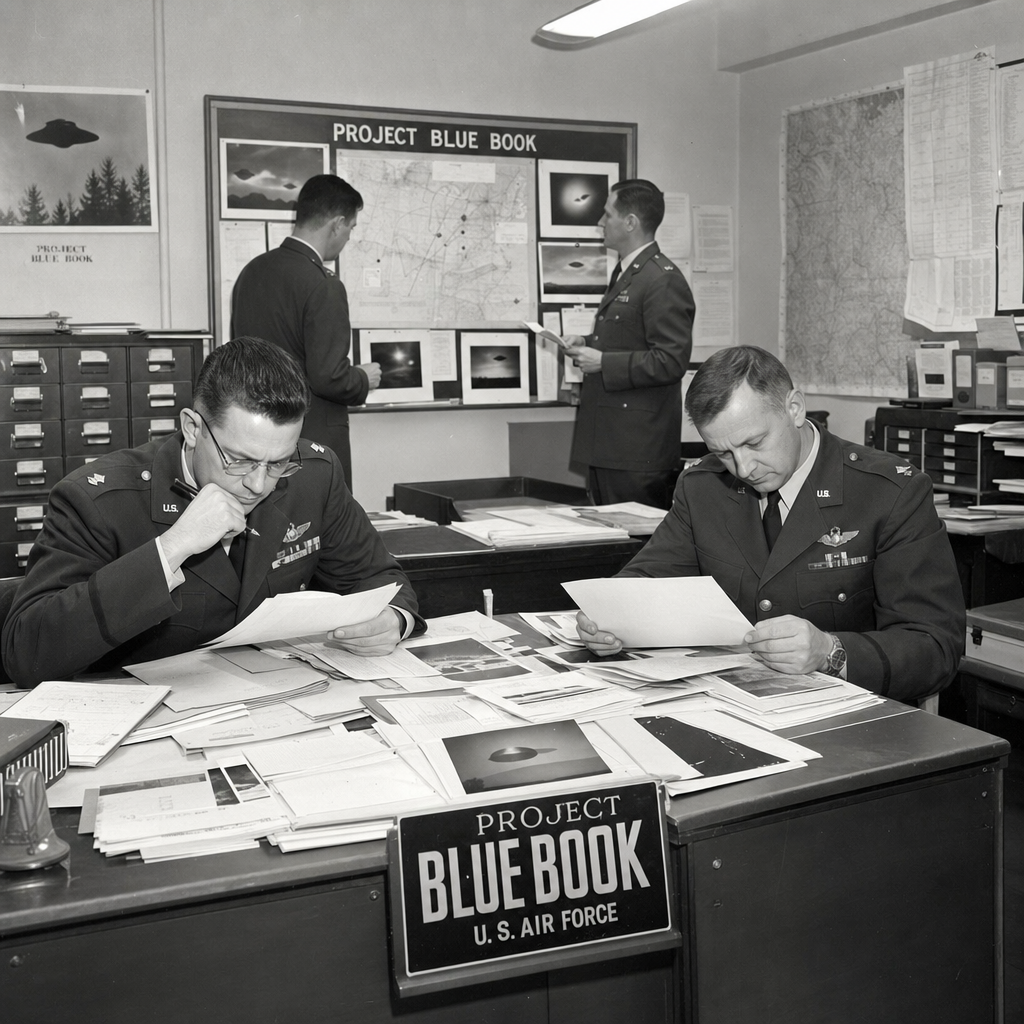
CURATED ARCHIVE, USER UPLOAD · Curated UNVEILED archive image
Verified HistoricalGovernment Record#project-blue-book#government#historic#usaf#j-allen-hynek
Project Blue Book
Date
1952-03-25
Location
Wright-Patterson AFB, Ohio
Witnesses
USAF analysts; thousands of citizens
Type
government-related
Entity
Unknown
Craft
—
Evidence
multiple
Reality
physical
Evidence Index
92/100
Popularity
100/100
Community Rating
4.7 (304)
Encounter DNA
72 similar encounters discovered
Compare traits, communications, symptoms and locations.
Full Report
OPENING SCENE
On the morning of March 19, 1952, in a small office at Wright-Patterson Air Force Base in Ohio, a 28-year-old U.S. Air Force captain named Edward J. Ruppelt walked into a job that, until that week, had not officially existed. His desk was bare. His staff was three intelligence analysts and one secretary. His mission, handed to him by the Air Technical Intelligence Center, was to take the existing pile of unsolved "flying saucer" reports — by then a 1,500-case backlog dating to Kenneth Arnold in June 1947 — and run a serious scientific investigation. He gave the new project a deliberately uninteresting name, picked because he thought it would help the work be taken seriously and not turn into a public spectacle: "Blue Book." It would run for the next 17 years, file 12,618 cases, and leave 701 of them — the ones it could not explain by any conventional means — permanently classified, in the final official report of January 30, 1970, as "Unidentified."
BACKGROUND
Project Blue Book was the third and final official U.S. Air Force study of unidentified flying objects, succeeding Project Sign (1947–48) and Project Grudge (1949–52). It was based at the Air Technical Intelligence Center (ATIC) at Wright-Patterson Air Force Base, near Dayton, Ohio. Its mission, on paper, had two parts: (1) determine whether UFOs were a threat to U.S. national security, and (2) scientifically analyse all UFO-related data. In practice, the project's staffing, funding, and direction shifted significantly over its lifetime.
TIMELINE
• March 19, 1952 — Captain Edward Ruppelt begins as the first project director.
• Summer 1952 — Project Blue Book is overwhelmed by the Washington UFO Wave (radar tracks over Washington National Airport, July 19–20 and 26–27). Ruppelt's staff personally investigates many of the radar incidents.
• 1953 — The Robertson Panel (a CIA-convened scientific panel chaired by physicist H. P. Robertson) is briefed by Blue Book and recommends a public-debunking posture. This shifts the project's public messaging.
• 1954 — Ruppelt leaves the Air Force. He is succeeded by Capt. Charles Hardin, then Maj. Robert Friend.
• 1956 — Ruppelt publishes "The Report on Unidentified Flying Objects," still the most-cited insider history of the project.
• 1963–1969 — Maj. Hector Quintanilla is project director. His tenure includes the Socorro Landing (1964), the Michigan Wave (1966, including Dexter and Hillsdale sightings — the famous "swamp gas" episode), and the Westall School (Australia, 1966) external reference cases.
• 1968 — The Condon Committee (University of Colorado, headed by physicist Edward U. Condon, funded by the U.S. Air Force) releases its final report. It recommends that "further extensive study of UFOs probably cannot be justified."
• Dec 17, 1969 — Secretary of the Air Force Robert C. Seamans Jr. announces Project Blue Book's termination.
• Jan 30, 1970 — Project Blue Book is officially closed. Final statistics: 12,618 cases, 701 "Unidentified."
• 1970s onward — The Blue Book files are transferred to the National Archives. Declassified versions become publicly available.
• 2008 — The full Blue Book archive is digitised and made available online by Project Blue Book Archive volunteers.
KEY PEOPLE
• Capt. Edward J. Ruppelt — first director, 1952–1953. Author of the most-cited insider history.
• Capt. Charles Hardin — director, 1953–1954.
• Maj. Robert Friend — director, 1958–1963.
• Maj. Hector Quintanilla — director, 1963–1969.
• Dr. J. Allen Hynek — Project Blue Book's senior scientific consultant for the project's entire existence (1948–1969). Astronomer at Ohio State; later founder of CUFOS.
• Dr. Edward U. Condon — head of the Condon Committee that recommended Blue Book's closure.
• H. P. Robertson — chair of the 1953 CIA panel.
LOCATION
Headquartered at Wright-Patterson Air Force Base, Dayton, Ohio, USA. ~39.83°N, 84.05°W. Field investigations conducted nationwide.
DATES & TIME PERIOD
March 19, 1952 – January 30, 1970 (17 years, 10 months).
SOURCE HISTORY
Three primary source channels:
1. The official Project Blue Book file collection (National Archives microfilm, ~110,000 pages).
2. Captain Ruppelt's "Report on Unidentified Flying Objects" (1956) — the canonical insider account.
3. The Condon Committee final report (1969) — the academic study that led to project closure.
Secondary but important: Hynek's "The UFO Experience" (1972) — his post-project scientific reassessment.
EVIDENCE SUMMARY (project-level)
• Total cases logged: 12,618
• Identified: 11,917 (94.4%)
• Unidentified: 701 (5.6%)
• Highest single-year case load: 1952 (1,501 cases — driven by the Washington Wave)
• Photographs in file: thousands; most identified as conventional aircraft, weather phenomena, or hoaxes
• Multi-witness cases in the Unidentified file: ~12% of the 701
MEDIA SUMMARY
The Project Blue Book file itself is the case's primary media — pages of Air Force memos, witness statements, sketches, and photographs preserved at the National Archives and now online.
OFFICIAL RECORDS
• Project Blue Book file collection, National Archives (Record Group 341).
• Air Force Regulation 80-17 (1962), governing UFO reporting procedures.
• Condon Report — "Final Report of the Scientific Study of Unidentified Flying Objects" (1969).
• AFR 80-17 cancellation (1976), six years after Blue Book closed.
MAJOR CLAIMS
• The U.S. Air Force ran a continuous, public-facing UFO investigation from 1947–1969.
• 5.6% of cases (701) were closed as "Unidentified."
• The 1953 Robertson Panel recommended a public-debunking posture rather than scientific investigation.
• The 1969 Condon Report concluded that further study was not justified.
SKEPTICAL CONTEXT
The traditional skeptic position (Klass, Sagan) treats the Blue Book "Unidentified" classification not as evidence of anything extraordinary, but as a statistical inevitability — given how many sightings were logged and how often investigators could not retroactively reconstruct the original conditions, a residual "Unidentified" rate around 5% is roughly what one would expect for any large class of poorly-controlled observations.
DISPUTED DETAILS
• Whether the Robertson Panel's debunking posture was scientifically motivated or politically motivated.
• Whether the Condon Report's conclusion was internally consistent with its own case analyses (some "Unidentified" cases inside the Condon volume read as remarkably hard to explain).
• Whether Project Blue Book had access to a parallel, classified UFO program. (Officially: no. Researchers have argued otherwise; AARO's 2024 Historical Record Report found no evidence of a hidden parallel program but acknowledged the question is recurring.)
DIFFERENT PERSPECTIVES
• U.S. Air Force official view: Blue Book was a serious investigation that found no UFO evidence of strategic threat or extraordinary physical mechanism.
• Ruppelt view (1956): Project Blue Book was a serious investigation that was institutionally undermined after 1953 and increasingly forced into a debunking posture.
• Hynek view (1972): The 701 "Unidentified" cases include genuinely anomalous events that deserve continuing scientific study.
• Modern AARO view (2024): The historical Blue Book record contains "well-documented incidents" that remain unresolved.
LATER DEVELOPMENTS
• 1973 — Hynek founds the Center for UFO Studies (CUFOS) explicitly to continue the scientific work Blue Book had abandoned.
• 1976 — Air Force Regulation 80-17 (UFO reporting) is cancelled.
• 2017 — Public revelation of the modern AATIP program reignites discussion of whether a Blue Book "shadow" program existed.
• 2022 — AARO (All-domain Anomaly Resolution Office) is established by the Department of Defense.
• 2024 — AARO Historical Record Report Vol. I references Blue Book extensively.
CULTURAL IMPACT
Project Blue Book is the institutional touchstone for almost every conversation about U.S. government involvement with UFOs. The 2019 History Channel dramatised television series of the same name (loosely based on Hynek's career) introduced the project to a new generation of viewers.
RELATED CASES
• Project Sign (1947–48) — predecessor.
• Project Grudge (1949–52) — predecessor.
• Mantell, Roswell, Socorro, Kelly-Hopkinsville, Washington Wave — major cases within the file.
• AATIP (2007–2012) — modern Pentagon program often compared.
REFERENCES & SOURCES
• Ruppelt, Edward J. "The Report on Unidentified Flying Objects" (Doubleday, 1956).
• Hynek, J. Allen. "The UFO Experience: A Scientific Inquiry" (Henry Regnery, 1972).
• Condon, Edward U. et al. "Final Report of the Scientific Study of Unidentified Flying Objects" (Bantam, 1969).
• Project Blue Book file collection, NARA Record Group 341.
• Project Blue Book Archive (volunteer-maintained digitisation), bluebookarchive.org.
• AARO Historical Record Report Vol. I (Department of Defense, 2024).
Witness Discussion0
Sign in to discuss this dossier and vote on the archive.
Log inNo discussion yet. Be the first to weigh in.
Similar Cases
documentation
Historical
ARCHIVE REFERENCE
2007-09-01 · Pentagon, Arlington, VA, United States
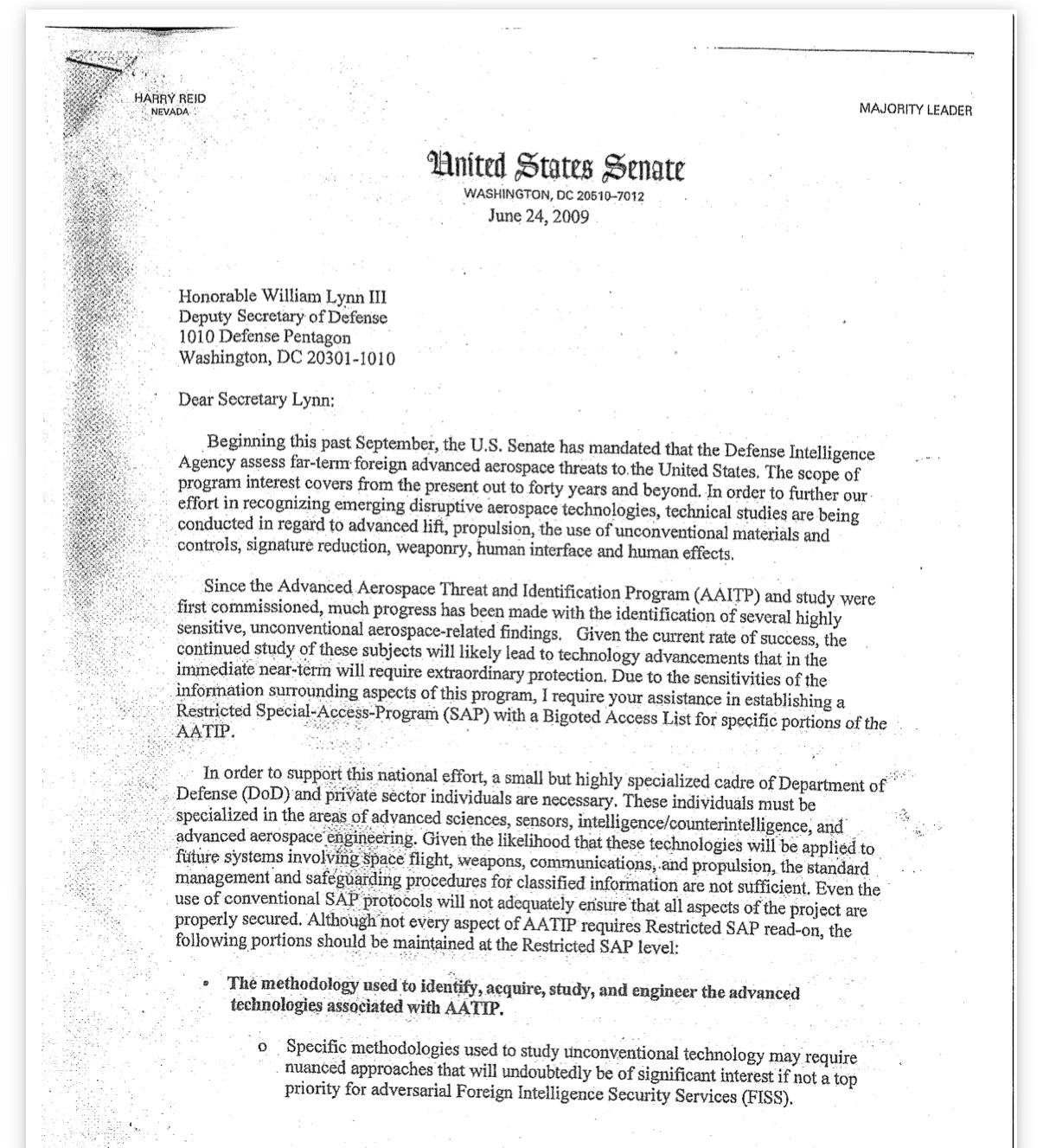
AATIP: Advanced Aerospace Threat Identification Program
Government Recordgovernment-related
multiple
Historical
CURATED ARCHIVE, USER UPLOAD
1989-11-29 · Eupen, Wallonia, Belgium
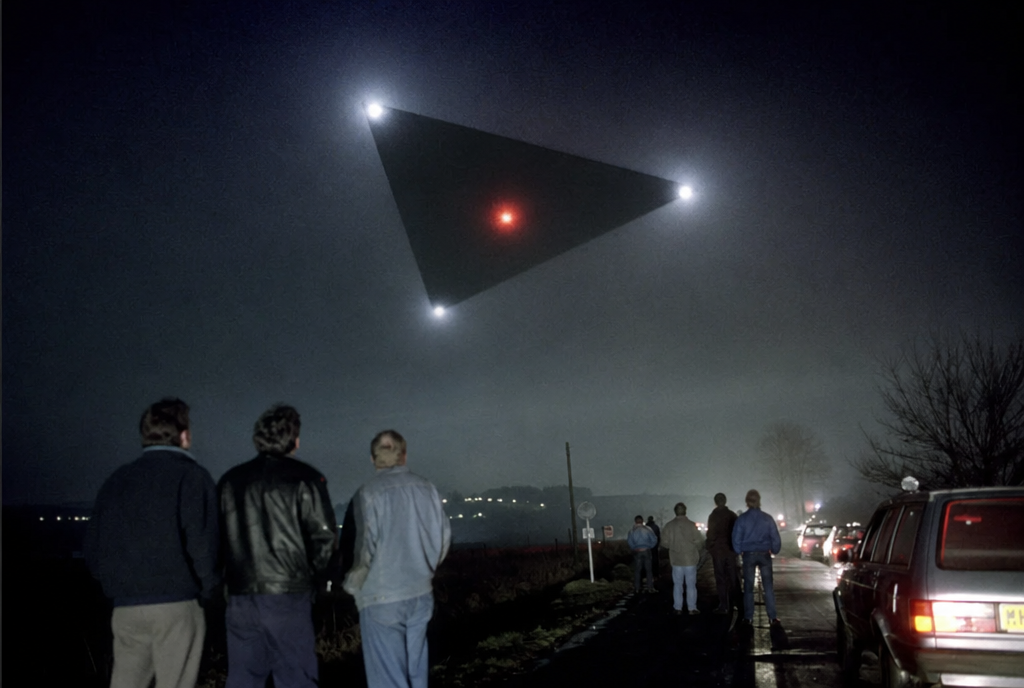
Belgian UFO Wave
Military Encountermass-sighting
multiple
Historical
CURATED ARCHIVE, USER UPLOAD
1976-09-19 · Tehran, Iran
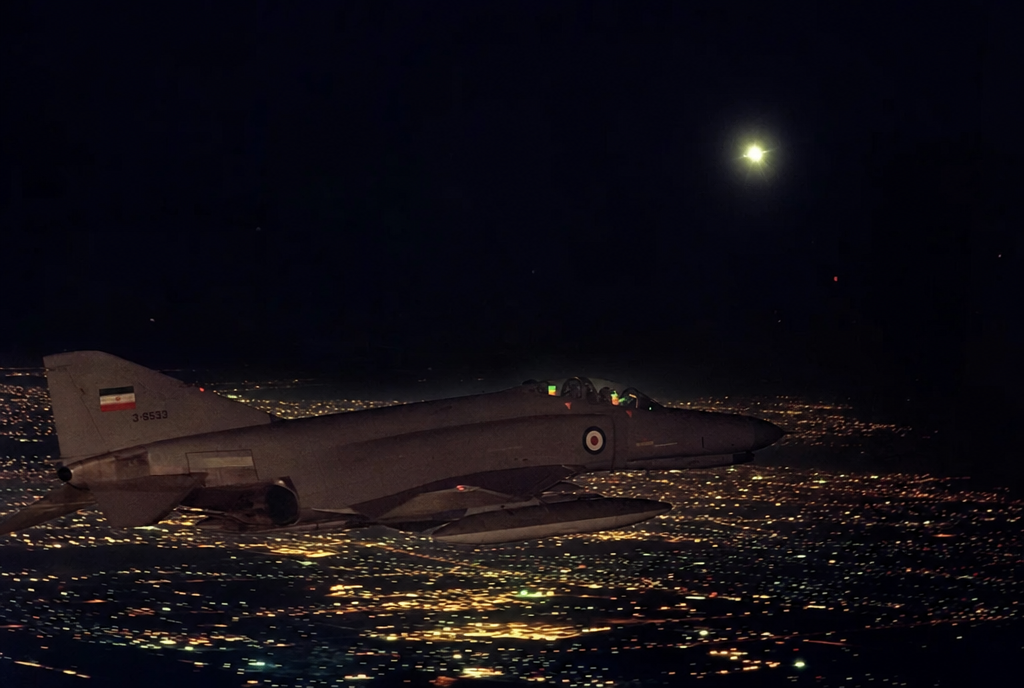
Tehran F-4 Incident
Military Encountermilitary
multiple
Historical
CURATED ARCHIVE, USER UPLOAD
1967-10-04 · Shag Harbour, Nova Scotia, Canada
Shag Harbour Crash
Military Encountercrash-retrieval
documentation
Historical
ARCHIVE REFERENCE
2008-09-01 · Las Vegas, Nevada, United States
AAWSAP: Advanced Aerospace Weapon System Applications Program
Government Recordgovernment-related

multiple
Historical
CURATED ARCHIVE, USER UPLOAD
1986-11-17 · Eastern Alaska airspace, United States
JAL Flight 1628 Encounter
Government Recordmilitary