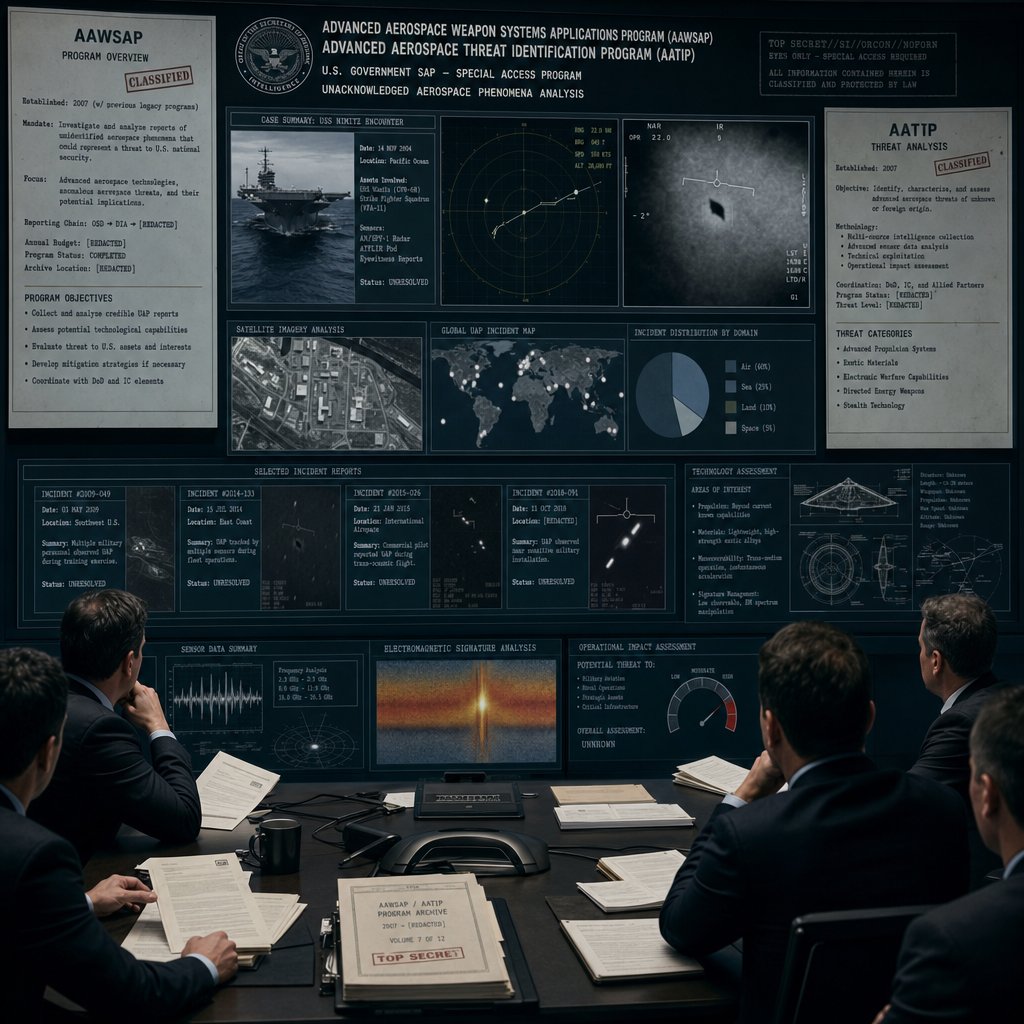
ARCHIVE REFERENCE · Curated UNVEILED archive image
Verified HistoricalGovernment Record#aawsap#government#historic#skinwalker-ranch#bigelow
AAWSAP: Advanced Aerospace Weapon System Applications Program
Date
2008-09-01
Location
Las Vegas, Nevada
Witnesses
AAWSAP team
Type
government-related
Entity
Unknown
Craft
—
Evidence
documentation
Reality
interdimensional
Evidence Index
90/100
Popularity
100/100
Community Rating
4.6 (208)
Encounter DNA
72 similar encounters discovered
Compare traits, communications, symptoms and locations.
Full Report
OPENING SCENE
In late 2007, in a quiet meeting room in the U.S. Capitol, Senate Majority Leader Harry Reid sat down with two veteran senators — Republican Ted Stevens of Alaska and Democrat Daniel Inouye of Hawaii — and Robert Bigelow, the founder of Bigelow Aerospace. Stevens, a fighter pilot in World War II, had a story about pacing a luminous object over the Aleutians; Inouye listened without saying much. Reid's case was simpler: there were sensor returns the U.S. Air Force could not explain, there were anecdotes from active-duty pilots, and there were anomalies on a Utah ranch Bigelow had recently purchased. What they agreed to was a small black-budget appropriation, channelled through the Defense Intelligence Agency, that would award a contract to Bigelow Aerospace Advanced Space Studies (BAASS) to investigate "advanced aerospace weapon system applications." The contract — known internally as AAWSAP — was signed in 2008. Over the next two years it would produce 38 technical white papers, deploy a multi-disciplinary research team to one of the strangest pieces of land in the American West, and lay the institutional groundwork for what, in 2017, would be revealed to the public as AATIP.
BACKGROUND
AAWSAP — the Advanced Aerospace Weapon System Applications Program — was a U.S. Defense Intelligence Agency contract program that ran from 2008 to approximately 2010. It is the predecessor and parent of the better-known AATIP program. The principal contractor was BAASS (Bigelow Aerospace Advanced Space Studies), a research arm of Robert Bigelow's aerospace company. Its primary administrative lead at the DIA was Dr. James T. Lacatski.
TIMELINE
• 2007 — Sen. Reid, Sen. Stevens, Sen. Inouye, and Robert Bigelow meet to discuss a UAP / advanced-aerospace research program.
• Aug 2008 — DIA Request for Proposals issued.
• Sept 2008 — AAWSAP contract awarded to BAASS. Contract value: approximately $22 million over two years.
• 2008–2010 — BAASS conducts on-the-ground field investigations, principally at the Bigelow Ranch (Skinwalker Ranch) in northeastern Utah, and produces 38 Defense Intelligence Reference Documents (DIRDs).
• 2010 — Main AAWSAP contract concludes. Some staff and continued work transition to AATIP within the Pentagon.
• 2017 — New York Times AATIP story re-introduces the underlying program lineage to public awareness.
• 2021 — Dr. James Lacatski (with Colm Kelleher and George Knapp) publishes "Skinwalkers at the Pentagon," the first public insider history of AAWSAP.
• 2024 — AARO Historical Record Report Vol. I includes AAWSAP in its institutional history.
KEY PEOPLE
• Sen. Harry Reid (D-NV) — primary congressional champion.
• Sen. Ted Stevens (R-AK) — co-sponsor.
• Sen. Daniel Inouye (D-HI) — co-sponsor.
• Robert Bigelow — founder of Bigelow Aerospace and BAASS.
• Dr. James T. Lacatski — DIA program manager and primary post-2021 spokesperson.
• Colm A. Kelleher — BAASS deputy administrator. Co-author of "Skinwalkers at the Pentagon."
• George Knapp — investigative reporter (KLAS-TV); co-author of "Skinwalkers at the Pentagon."
LOCATION
DIA headquarters, Washington D.C. area. BAASS research operations at Bigelow Ranch ("Skinwalker Ranch"), Uintah County, Utah, USA. ~40.27°N, 109.88°W.
DATES & TIME PERIOD
Active contract: 2008–2010 (~24 months). Continued lineage work through AATIP: 2010–2012. Public revelation: 2017 onward.
SOURCE HISTORY
Three primary public sources:
1. The 38 Defense Intelligence Reference Documents (DIRDs), declassified versions of which are publicly available.
2. The Lacatski / Kelleher / Knapp book "Skinwalkers at the Pentagon" (2021), the first insider account.
3. The AARO 2024 Historical Record Report and Congressional testimony, 2021–2024.
EVIDENCE SUMMARY
• Contract value: ~$22 million.
• Primary output: 38 DIRDs on advanced aerospace topics (warp drive theory, metamaterials, anti-gravity propulsion, biological effects of UAP encounters, etc.).
• Field operations: at the Bigelow Ranch in Utah.
• Personnel: multi-disciplinary, including physicists, biologists, intelligence analysts.
• Public photographs or video: none from the program itself; some Bigelow Ranch research footage has been independently released.
MEDIA SUMMARY
No specific iconic visual material from AAWSAP itself. The most-cited associated imagery is the Skinwalker Ranch (which was sold by Bigelow to a separate owner in 2016).
OFFICIAL RECORDS
• DIA AAWSAP contract documents, partially released.
• 38 Defense Intelligence Reference Documents (DIRDs), 2008–2010 (declassified).
• AARO Historical Record Report Vol. I, March 2024.
MAJOR CLAIMS
• AAWSAP was a real, congressionally-supported DIA program from 2008 to ~2010.
• It produced 38 technical white papers on advanced aerospace topics.
• Significant field investigation took place at the Bigelow Ranch in Utah.
• The program's existence was not publicly known until 2017.
• AAWSAP is the direct institutional parent of AATIP.
SKEPTICAL CONTEXT
Skeptic researchers accept AAWSAP's existence but argue that (a) the choice to focus a substantial portion of field work on Skinwalker Ranch — a property already associated with extensive folklore — biased the data collection, and (b) the 38 DIRDs vary widely in scientific quality, with some reading as serious survey papers and others as speculative.
DISPUTED DETAILS
• The exact balance of UAP-encounter investigation vs. ranch-based anomaly investigation within AAWSAP.
• The scientific quality of individual DIRDs (some are well-regarded, others controversial).
• Whether AAWSAP's findings include unpublished material that has been retained as classified.
DIFFERENT PERSPECTIVES
• Lacatski / Kelleher / Knapp view (2021 book): AAWSAP was a serious, multi-disciplinary investigation that produced significant findings, including at Skinwalker Ranch.
• Mainstream skeptic view: AAWSAP was a small, real program whose ranch-based research was scientifically problematic.
• Pentagon official view (2024 AARO): AAWSAP existed, produced documented output, and is part of the institutional continuity now consolidated under AARO.
LATER DEVELOPMENTS
• 2010 — Contract concludes.
• 2017 — Public revelation via AATIP NYT story.
• 2021 — Lacatski / Kelleher / Knapp book.
• 2022 — AARO established.
• 2024 — AARO Historical Record Report.
CULTURAL IMPACT
AAWSAP is the institutional missing link between historical (Blue Book) and modern (AATIP / AARO) U.S. government UAP work, and the most significant funded UAP research contract since Project Blue Book closed in 1969.
RELATED CASES
• AATIP — direct successor program.
• Skinwalker Ranch — primary field research site.
• Project Blue Book (1952–69) — earlier institutional ancestor.
REFERENCES & SOURCES
• Lacatski, James T.; Kelleher, Colm A.; Knapp, George. "Skinwalkers at the Pentagon" (RTMA, 2021).
• Defense Intelligence Reference Documents (DIRDs), DIA, 2008–2010.
• AARO Historical Record Report Vol. I (Department of Defense, 2024).
• U.S. Senate UAP hearings and statements, 2017–2024.
Witness Discussion0
Sign in to discuss this dossier and vote on the archive.
Log inNo discussion yet. Be the first to weigh in.
Similar Cases
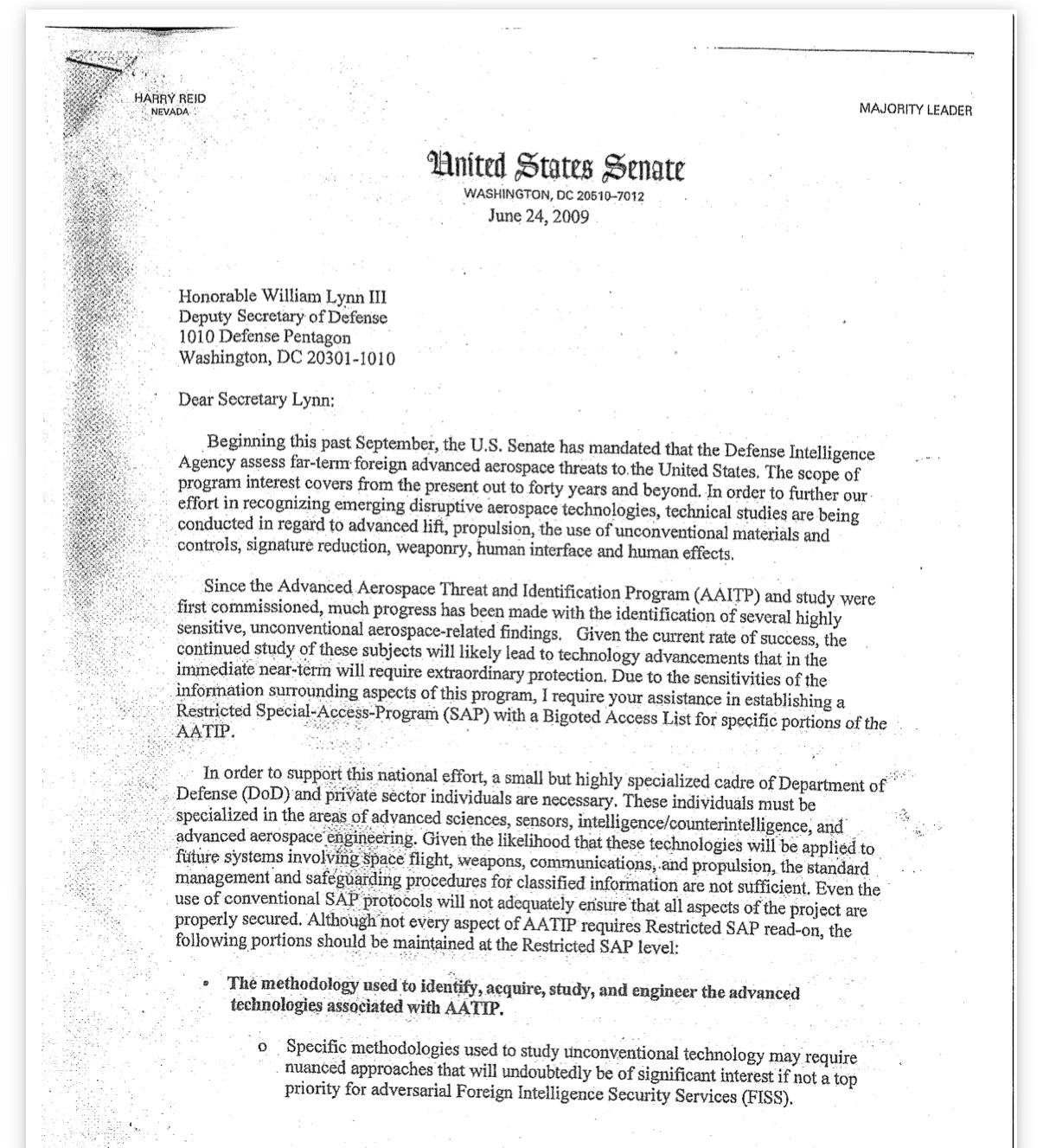
documentation
Historical
ARCHIVE REFERENCE
2007-09-01 · Pentagon, Arlington, VA, United States
AATIP: Advanced Aerospace Threat Identification Program
Government Recordgovernment-related
multiple
Historical
CURATED ARCHIVE, USER UPLOAD
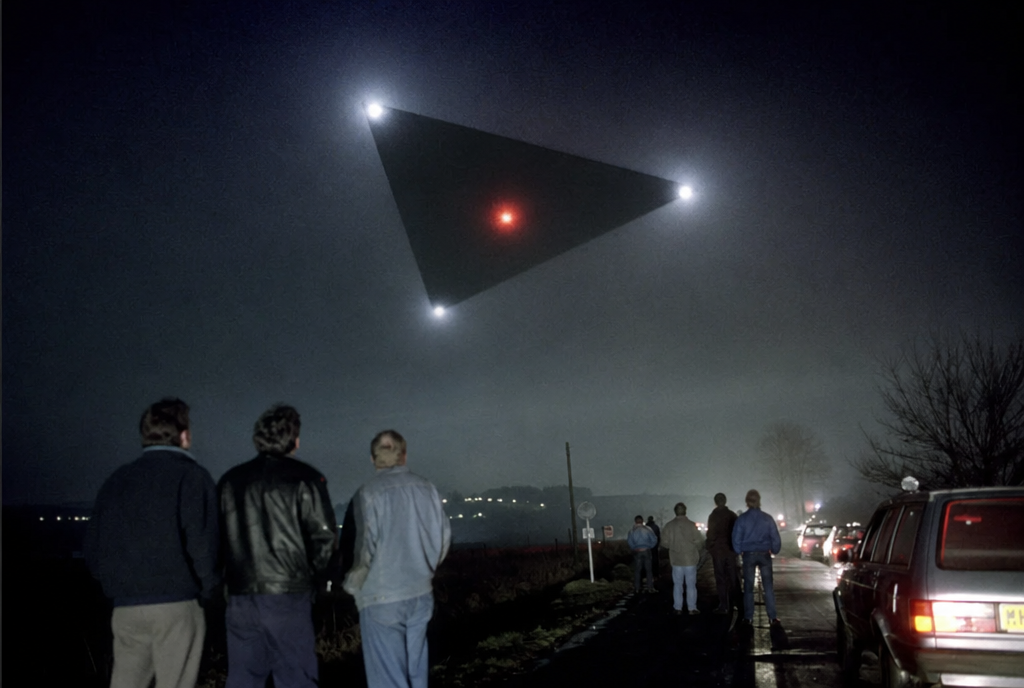
1989-11-29 · Eupen, Wallonia, Belgium
Belgian UFO Wave
Military Encountermass-sighting
multiple
Historical
CURATED ARCHIVE, USER UPLOAD
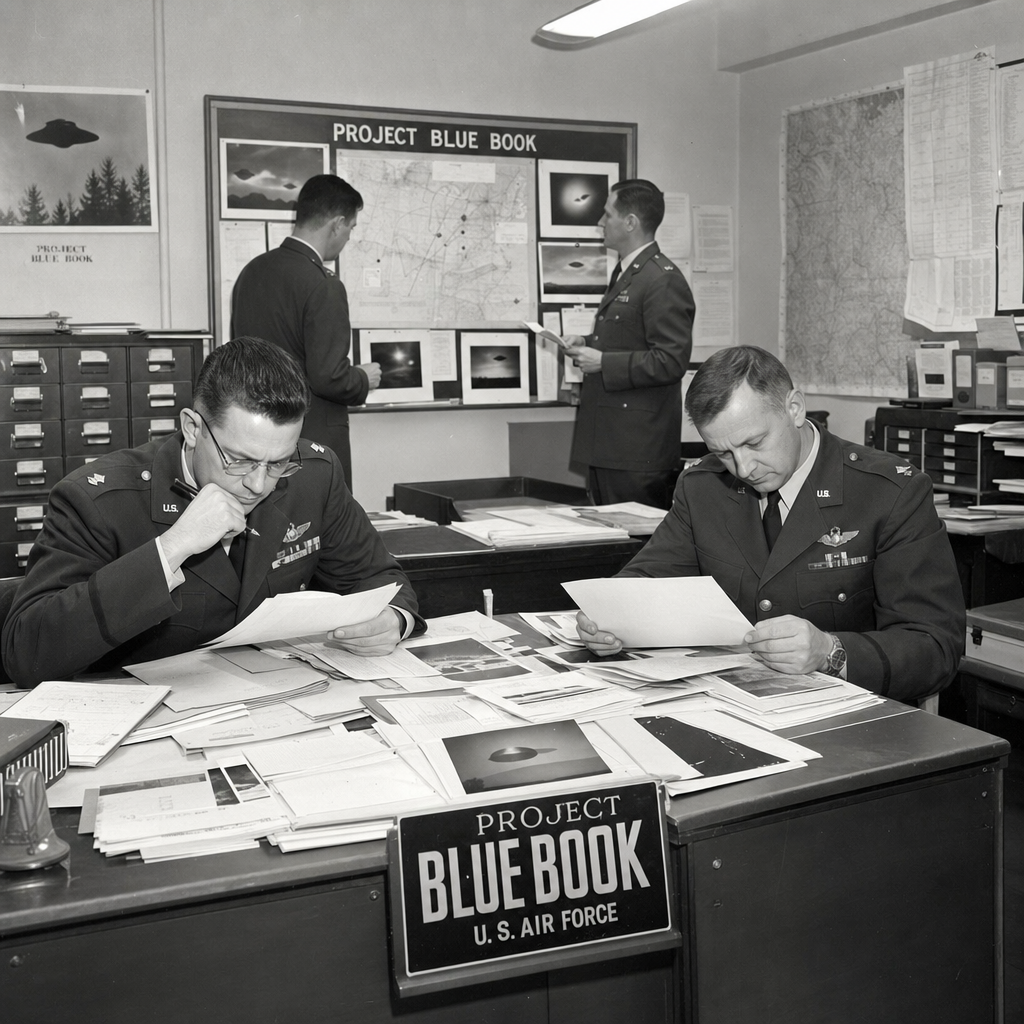
1952-03-25 · Wright-Patterson AFB, Ohio, United States
Project Blue Book
Government Recordgovernment-related
multiple
Historical
CURATED ARCHIVE, USER UPLOAD
1976-09-19 · Tehran, Iran
Tehran F-4 Incident
Military Encountermilitary
multiple
Historical
CURATED ARCHIVE, USER UPLOAD
1967-10-04 · Shag Harbour, Nova Scotia, Canada
Shag Harbour Crash
Military Encountercrash-retrieval

multiple
Historical
CURATED ARCHIVE, USER UPLOAD
1986-11-17 · Eastern Alaska airspace, United States
JAL Flight 1628 Encounter
Government Recordmilitary