CURATED ARCHIVE, USER UPLOAD · Wikimedia Commons, public domain
Verified HistoricalHistorical Account#kenneth-arnold#historic#craft-sighting#first-modern-ufo
Kenneth Arnold: First Modern UFO Sighting
Date
1947-06-24
Location
Mount Rainier, Washington
Witnesses
Kenneth Arnold
Type
sighting
Entity
Unknown
Craft
Crescent / saucer formation
Evidence
testimony
Reality
physical
Evidence Index
84/100
Popularity
100/100
Community Rating
4.6 (340)
Encounter DNA
72 similar encounters discovered
Compare traits, communications, symptoms and locations.
Full Report
OPENING SCENE
At about 3:00 p.m. on Tuesday, June 24, 1947, civilian pilot Kenneth Arnold was flying his single-engine CallAir A-2 over the Cascade Range of Washington State, helping search for a downed C-46 Marine transport plane near Mount Rainier. The afternoon was unusually clear. As he turned his aircraft toward Yakima, a bright flash caught his eye, and then another. Looking left, he saw what he later told the East Oregonian newspaper were "nine peculiar-looking aircraft" flying in echelon formation between Mount Rainier and Mount Adams. He timed them with his cockpit clock. He timed them with two known reference points on the ground. The math he did later that day in front of a reporter would, within forty-eight hours, place a new phrase into the English language: "flying saucer."
BACKGROUND
Kenneth A. Arnold (1915–1984) was a 32-year-old businessman and experienced civilian pilot from Boise, Idaho, who manufactured and sold fire-suppression equipment up and down the Pacific Northwest. He had logged several thousand hours in light aircraft, was a member of the Idaho Search & Rescue Mercy Flyers, and was actively searching for a missing U.S. Marine Corps C-46 (which had crashed earlier that year, killing all 32 aboard) when the encounter occurred. He had no prior interest in unidentified flying objects.
TIMELINE
• June 24, 1947, ~3:00 p.m. PDT — Arnold sees the first bright flash off his left wing.
• 3:00–3:03 p.m. — He counts nine objects flying in a chain between Mt. Rainier and Mt. Adams, estimates their length-to-distance ratio against known landmarks (Mt. Rainier and Mt. Adams are 47 miles apart; he times the chain crossing this distance).
• 3:03 p.m. — He calculates a speed of approximately 1,700 mph. Knowing this was faster than any then-known aircraft (the X-1 had not yet broken the sound barrier; that would happen four months later, in October 1947), he assumed they were a classified U.S. military prototype.
• June 25, 1947 — Arnold lands in Yakima, then flies on to Pendleton, Oregon. He tells the airport staff and, later that evening, the East Oregonian newspaper.
• June 26, 1947 — East Oregonian wire story carried by the Associated Press. In the story, Arnold described the objects' motion as "like a saucer if you skipped it across the water." A wire-service editor compressed that into "flying saucers." The term went national overnight.
• Summer 1947 — Hundreds of related sightings reported across the United States during the so-called "Summer of the Saucers."
• July 8, 1947 — Roswell Army Air Field press release (the famous "RAAF Captures Flying Saucer" announcement), six days after the Arnold story.
• 1947 — Project Sign opened by the U.S. Army Air Forces to study the wave.
KEY WITNESSES & PEOPLE
• Kenneth Arnold — primary and sole witness.
• Bill Bequette — East Oregonian reporter who wrote the original article.
• Nolan Skiff — managing editor who put the story on the AP wire.
• Capt. E. J. Smith and crew of United Airlines Flight 105 — separately reported a similar formation of nine objects over Idaho on July 4, 1947, days later (Disputed corroboration: not seen at the same time but in the same wave).
LOCATION
Cascade Range, Washington State, USA. Between Mount Rainier (46.85°N, 121.76°W) and Mount Adams (46.20°N, 121.49°W). Arnold's aircraft was estimated at roughly 9,200 feet altitude.
DATES & TIME PERIOD
Encounter: June 24, 1947, ~3:00 p.m. Pacific Daylight Time. Public wire story: June 25–26, 1947.
SOURCE HISTORY
Three primary contemporaneous sources:
1. Arnold's signed statement to Army Air Forces investigators (July 1947), preserved in Project Sign / later Project Blue Book files.
2. The June 25–26, 1947 East Oregonian / AP wire-service articles.
3. Arnold's own 1952 book "The Coming of the Saucers" (co-authored with Ray Palmer).
Arnold gave broadcast interviews repeatedly over the following 35 years (Edward R. Murrow's CBS show in 1950 being the most-cited), and his account remained internally consistent in detail.
EVIDENCE SUMMARY
• Witness testimony: One trained civilian pilot. Sober and respected; no prior history of UFO claims.
• Multiple-witness corroboration: None at the same time. Several wave-period sightings reported similar morphology.
• Photographs: None — Arnold did not have a camera in the cockpit.
• Radar: No civilian or military radar in the area; Pacific Northwest radar coverage in 1947 was sparse.
• Physical traces: None.
• Government investigation: Yes — Project Sign opened in late 1947 partly in response to the Arnold case and the broader wave.
MEDIA SUMMARY
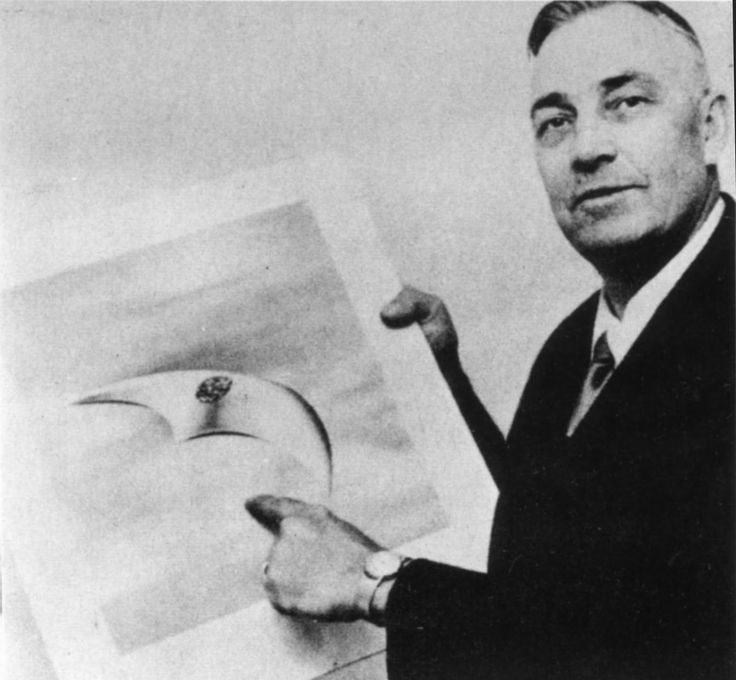
No verified photograph or video exists. Contemporary newspaper illustrations published by the AP show artist's renditions of the formation; these are visual recreations based on Arnold's verbal description, not photographs.
OFFICIAL RECORDS
• Project Sign / Blue Book file on the Kenneth Arnold sighting (declassified; available via the National Archives).
• U.S. Army Air Forces Intelligence summary (Aug 1947) — initially leaned toward classifying the case as a misidentification, then was unable to settle on a single explanation.
MAJOR CLAIMS
• Arnold: Nine bright, crescent or disc-shaped objects flying in echelon between Mt. Rainier and Mt. Adams at approximately 1,700 mph.
• Arnold (often misquoted): The objects' MOTION was saucer-like, not their SHAPE. He described several of them as crescent-shaped. The "flying saucer" label was a journalist's compression.
SKEPTICAL EXPLANATIONS
• Pelican mirage: An optical illusion caused by a flight of large birds passing through layered air at distance. Proposed by atmospheric scientist James E. McDonald (1968) and revived by Martin Shough; the geometry of the sighting (objects appearing to weave between mountain ridges over tens of miles) is widely considered to require an actual airborne formation, not a mirage.
• Mountain-wave clouds (lenticular formations) catching afternoon sun. Possible for one or two flashes, less plausible for nine timed pulses.
• Classified U.S. military prototype — Arnold's own first hypothesis. No declassified U.S. program from 1947 matches the description.
DISPUTED DETAILS
• Whether Arnold actually counted nine objects or simply estimated a "chain" of unknown count.
• The exact shape — Arnold's drawings vary slightly between his original statement (more crescent-like) and later interviews (more disc-like).
• The exact speed — 1,700 mph is Arnold's calculation from his timing; some skeptics argue the timing error margin could allow for speeds as low as 500–700 mph.
DIFFERENT PERSPECTIVES
• Historian view: The Arnold case is the origin moment of the modern UFO era — not because it was uniquely strange but because it appeared in a major wire story at a moment of intense Cold War anxiety.
• UFOlogist view: A trained pilot, a clear afternoon, two reference mountains, a careful speed calculation — the case is one of the cleaner pre-radar witness reports.
• Skeptic view: A genuine optical phenomenon (probably weather-related), badly translated into popular culture by an AP rewrite.
LATER DEVELOPMENTS
• 1948 — Project Sign published its initial report; the Arnold case was one of several it could not explain.
• 1968 — McDonald's "Bird Mirage" paper.
• 2007 — On the 60th anniversary, the Center for UFO Studies hosted a public memorial event in Pendleton, OR.
• Arnold returned to private business and remained a low-profile witness for the rest of his life. He died of cancer in 1984.
CULTURAL IMPACT
The case that gave the modern world its vocabulary: "flying saucer", "UFO wave", "the Summer of '47." Every subsequent UFO discussion, government report, and pop-culture reference traces back to Bill Bequette's wire copy of June 25, 1947.
RELATED CASES
• Roswell Incident — broke in the press 14 days later, July 8, 1947.
• Maury Island Incident — June 21, 1947, just days before Arnold; Harold Dahl's disputed Puget Sound encounter.
• Capt. E. J. Smith's United Flight 105 sighting — July 4, 1947, Idaho.
REFERENCES & SOURCES
• East Oregonian, Pendleton, OR, June 25–26, 1947 (AP wire).
• Arnold, Kenneth & Palmer, Ray. "The Coming of the Saucers" (Amherst Press, 1952).
• Project Sign / Project Blue Book file, U.S. Army Air Forces (National Archives).
• McDonald, James E. (1968). "UFOs — An International Scientific Problem." AIAA paper.
• Shough, Martin. "Re-examining the Kenneth Arnold Sighting." MUFON Journal, 2010.
Witness Discussion0
Sign in to discuss this dossier and vote on the archive.
Log inNo discussion yet. Be the first to weigh in.
Similar Cases
video
Historical
CURATED ARCHIVE, USER UPLOAD
2004-11-14 · Pacific Ocean off San Diego, United States
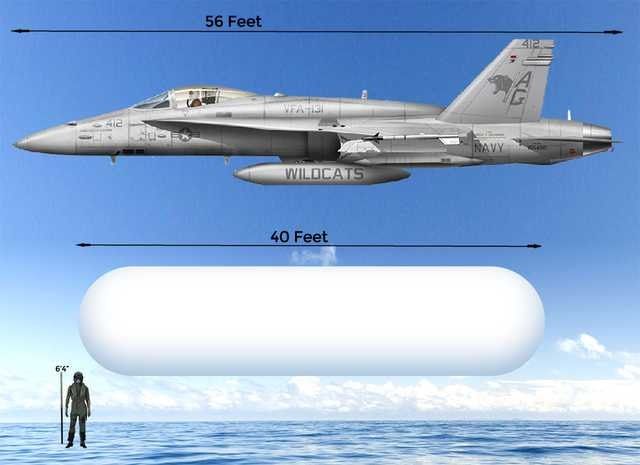
USS Nimitz 'Tic Tac' Encounter
Declassified US Navy encounter with a tic-tac shaped craft displaying impossible flight characteristics, confirmed by the Department of Defense.
Military Encountermilitary
documentation
Historical
ARCHIVE REFERENCE
2007-09-01 · Pentagon, Arlington, VA, United States
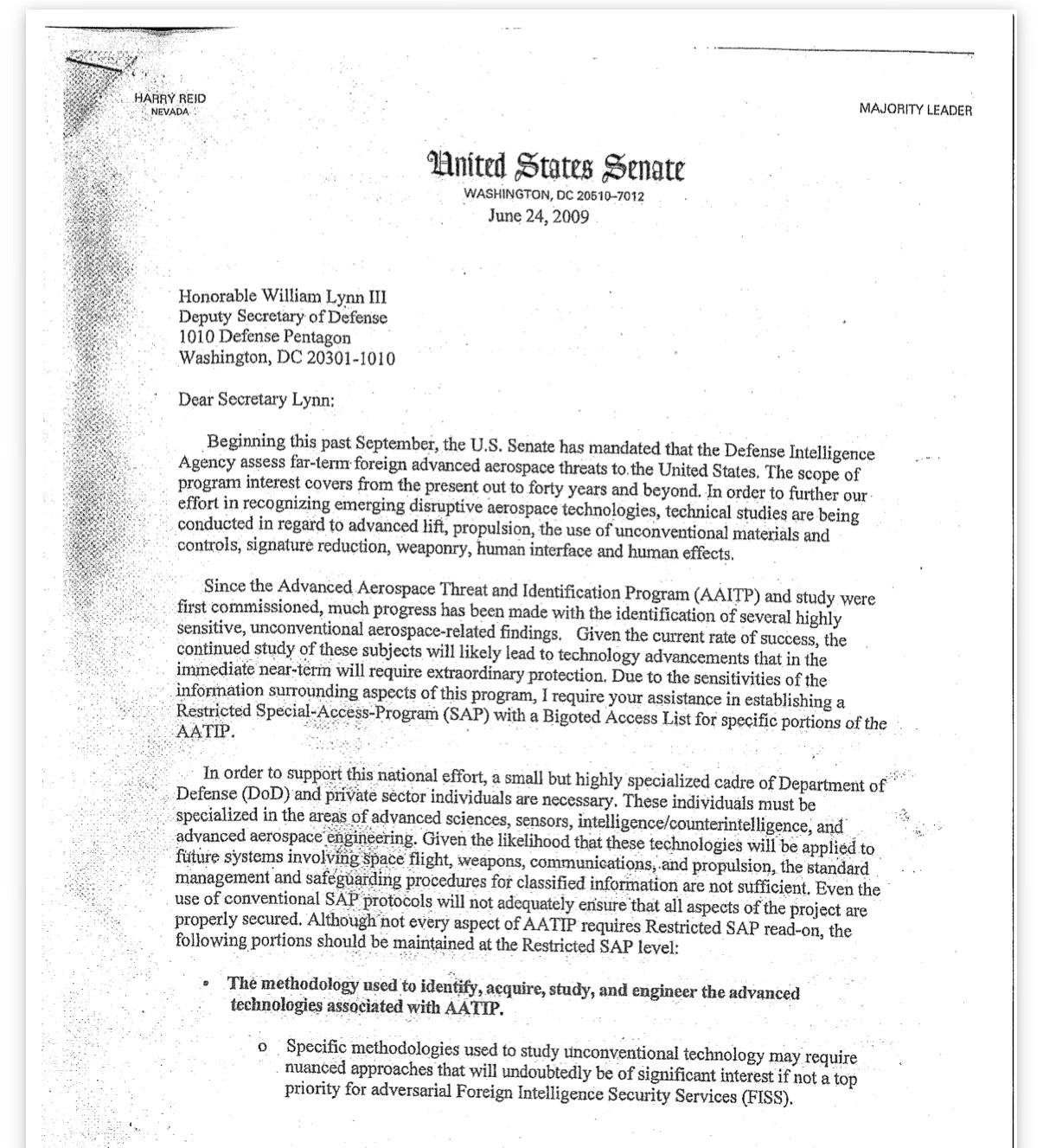
AATIP: Advanced Aerospace Threat Identification Program
Government Recordgovernment-related
video
Historical
CURATED ARCHIVE, USER UPLOAD
2015-01-21 · Atlantic Ocean off Florida, United States
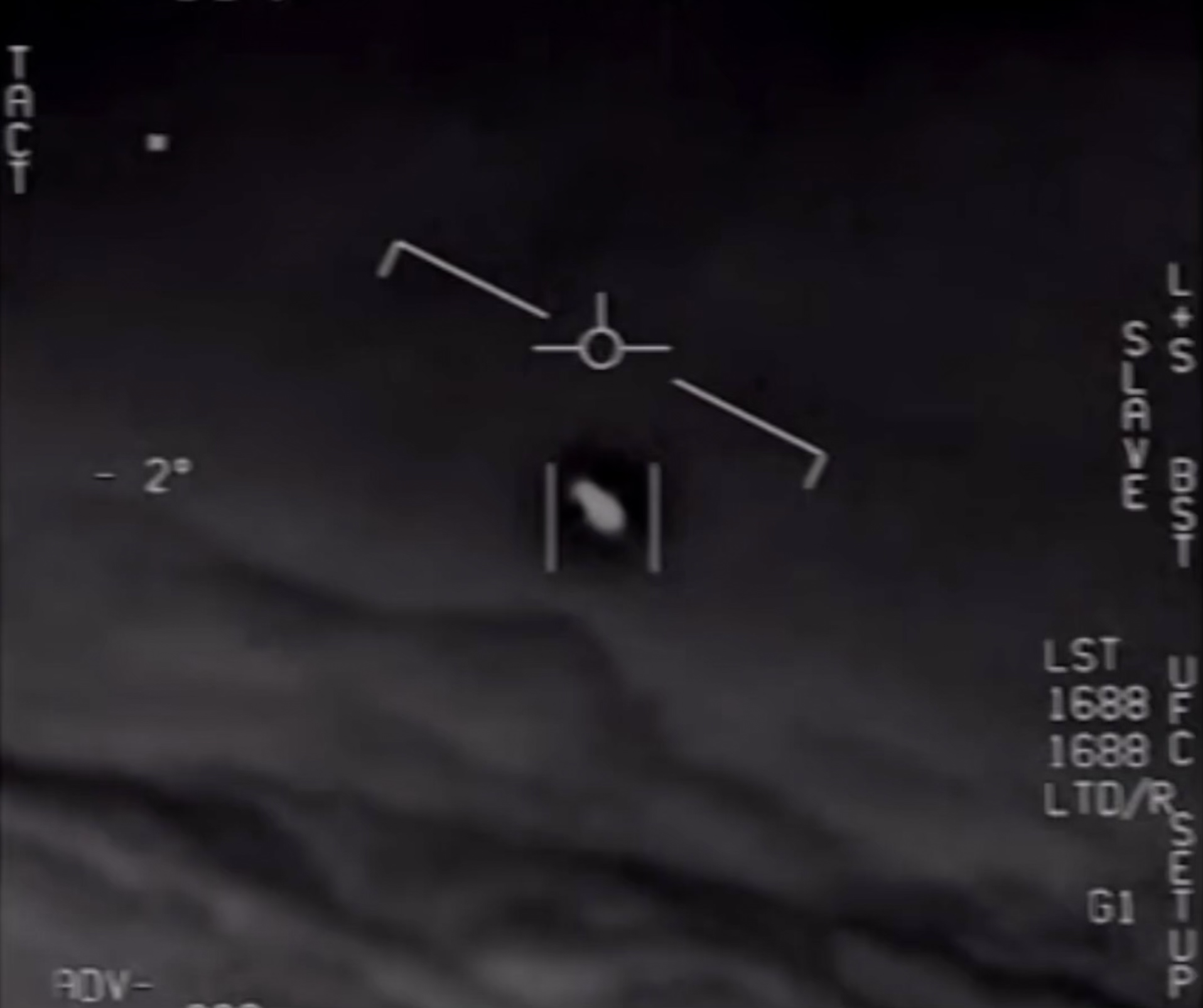
Gimbal Encounter
Military Encountermilitary
multiple
Historical
CURATED ARCHIVE, USER UPLOAD
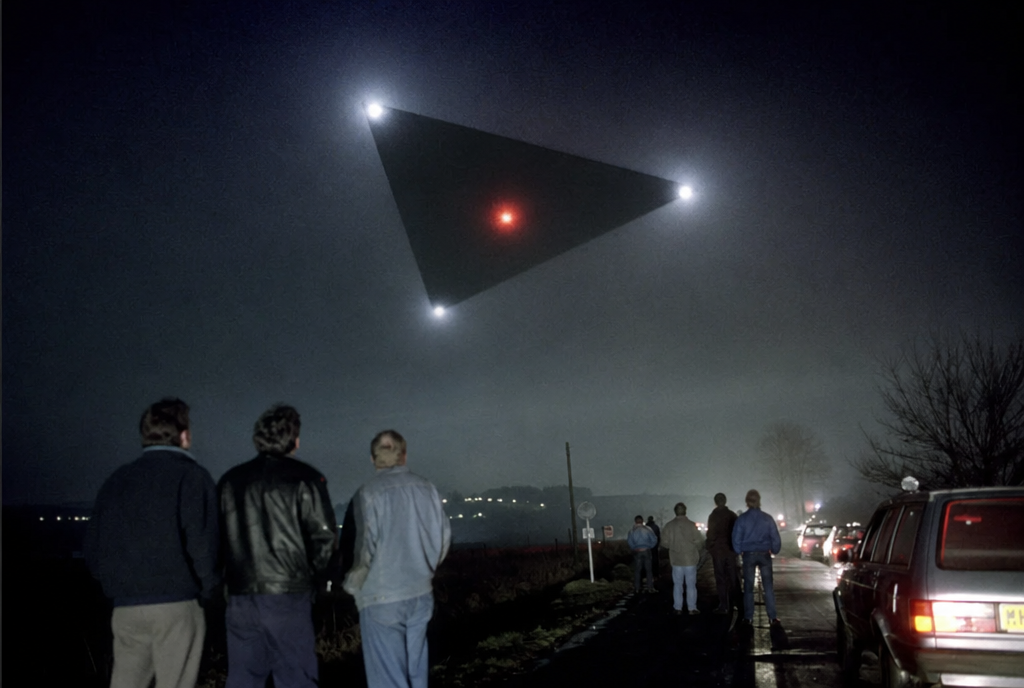
1989-11-29 · Eupen, Wallonia, Belgium
Belgian UFO Wave
Military Encountermass-sighting
multiple
Historical
CURATED ARCHIVE, USER UPLOAD
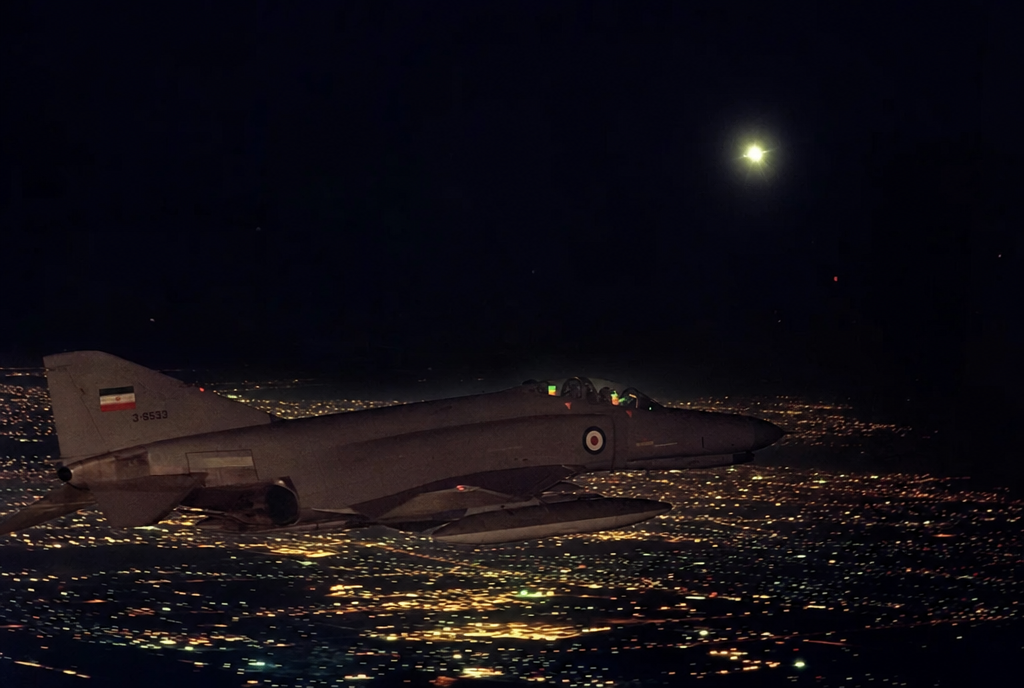
1976-09-19 · Tehran, Iran
Tehran F-4 Incident
Military Encountermilitary
multiple
Historical
CURATED ARCHIVE, USER UPLOAD
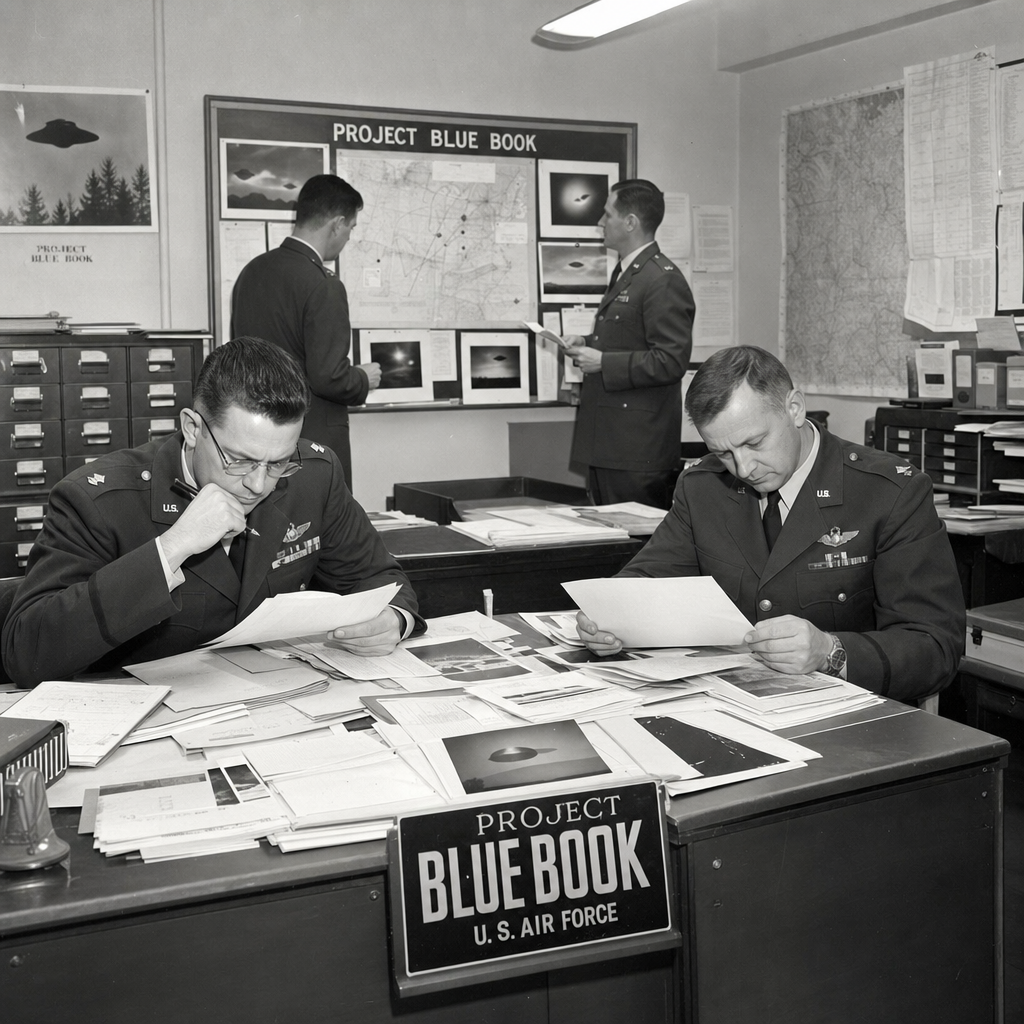
1952-03-25 · Wright-Patterson AFB, Ohio, United States
Project Blue Book
Government Recordgovernment-related